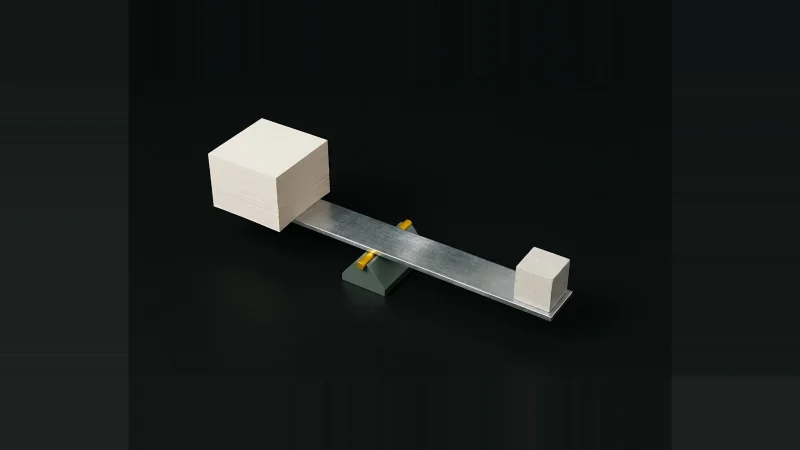
The AGC's 2026 workforce survey is direct: 88% of general contractors report they can't fill craft and hourly positions. The industry needs roughly 500,000 additional workers this year. Most of the coverage focuses on the field — framers, concrete finishers, ironworkers. But the shortage is just as real in the bid room.
Senior estimators are retiring. Junior hires are coming up faster than firms can train them. And the document volume per pursuit keeps growing — larger project sets, more addenda, more layered spec sections to cross-reference before you can write a single line of scope.
The firms getting ahead of this aren't just hiring faster. They're making each person on their pre-con team more productive. That's where purpose-built construction AI is starting to move the needle.
Hiring a junior estimator doesn't solve the problem. You solve the headcount problem but you don't solve the throughput problem. A new hire needs 18 to 36 months before they can own a full scope review on a complex ICI project without significant supervision.
Meanwhile, your senior people are stretched. They're covering multiple pursuits at once, mentoring junior staff, handling RFIs from active projects, and reviewing buyout packages from the last job. The bid calendar doesn't slow down for any of that.
The result: firms are either chasing fewer bids, or they're cutting corners on pre-con quality. Both options cost money.
When a pre-con team is under-resourced, the first thing to go is depth of review. Scope sheets get built from the last similar job. Spec sections don't get read — they get skimmed. Drawings get a pass rather than a full cross-reference against the technical specs.
That's how a $400,000 roof cover board disappears from a $50M project. The item existed in the spec. It just didn't make it into the scope package because no one had time to cross-reference Section 07 against the roofing drawings. The GC absorbed it.
That's also how a $300,000 lead-lined glass requirement gets missed on a hospital imaging suite — buried in the MEP spec, not called out on the architectural drawings, and caught only after the sub submitted a change order on site. (Both examples are from Chapter 5 of The Scope Gap Playbook, drawn from GC interviews.)
These aren't one-off failures. They're what happens when experienced people don't have enough time to do thorough pre-con work.
A lot of pre-con teams have tried using general-purpose AI tools — ChatGPT, Copilot — for document review. The feedback is consistent: useful for drafting emails, not useful for construction pre-con.
Here's why. A full project set isn't just a contract. It's drawings, specifications, addenda, supplementary conditions, geotechnical reports, and RFI logs. These documents reference each other constantly. Section 09 21 16 in the spec describes drywall; the architectural drawings show wall types; the structural drawings show backing requirements; and the addendum changes two of the wall assemblies. A useful scope review has to hold all of that together at once.
Generic AI tools can't ingest a full project set as a unified document. They don't understand how drawings and specs interact. They can't cite the exact page and section when they surface a risk. And they produce unstructured output — which means your estimator still has to do the interpretation work manually.
That's the difference between a tool adapted from another industry and one built from the ground up for GC pre-con workflows.
Provision was built by a civil engineer and a quantity surveyor specifically for general contractor pre-construction. It reads the full project set — drawings, specs, contracts, addenda — as a unified source. Every answer, every risk flag, every scope item is cited back to the exact clause, section, or page.
Here's what that looks like in practice across the three core pre-con workflows.
Building a complete scope-of-work package from scratch — one that's specific to the project documents, not copy-pasted from a template — takes 30 to 40 hours of manual work per bid. That's a senior estimator reading drawings, cross-referencing specs, identifying what each trade is responsible for, and drafting language detailed enough that a sub can't claim they didn't know.
Scope Agent does that in under 60 minutes. It extracts scope items trade by trade, flags items that appear in drawings but not in specs (or vice versa), and produces a structured package ready for bid day. In internal validation, it matches experienced estimators on scope item extraction at 97% accuracy — against a human baseline of 91.3% that took roughly four days per project.
For a pre-con team running eight to twelve pursuits at once, that difference in throughput is the difference between going after a job and passing on it.
Risk review is another place where thin teams cut corners. Reading a 200-page subcontract against a 2,000-page spec book takes hours. When you're under time pressure, you read the clauses you already know to watch for and trust that the rest is standard.
That's how firms accumulate exposure they didn't price. The "readily inferable" language. The indemnification clause that shifts more risk than the standard AIA form. The liquidated damages provision that's buried in the supplementary conditions, not the main contract body.
Risk Review identifies risks at 99% accuracy and cites every flag back to the exact clause and page. Firms using it report an 80% reduction in contract and spec review time. More importantly, they stop missing the risks that aren't in the obvious places.
One Senior PM at a Canadian ICI GC put it directly: "Our construction management clients expect us to find the scope gaps in the design too now. They expect us to be designers and engineers." That expectation doesn't shrink when your team does.
Bid day is a different kind of pressure. Questions come in from subs, from your own team, from the owner's rep. "Does the spec require a submittal for this product?" "What's the specified compressive strength for the slab-on-grade?" "Did the addendum change the fire-stopping requirement?"
Without a tool, that means someone stops what they're doing, opens the spec, searches for the section, reads the relevant language, and answers the question. That cycle takes 10 to 20 minutes per query. On a busy bid day, it adds up fast.
Chat Agent answers those questions in under 20 seconds, with a citation to the exact document, section, and page. It reads the full project set — drawings, specs, addenda — and returns verified answers at 95% accuracy. Your team stays focused. Questions get answered. Nothing gets assumed.
Here's a simple way to think about the capacity problem. If a pre-con team of four estimators can each run two thorough bid reviews per month at current workload, that's eight bids per month. Add AI tools that cut document review time by 30 to 40 hours per bid, and each estimator can handle a third or fourth pursuit in the same time window. That's potentially twelve bids per month from the same team — without adding a single hire.
Provision's platform has helped GC pre-con teams get through pursuits twice as fast. Across $100 billion in project value reviewed and 100,000 documents processed, the pattern holds: the bottleneck isn't judgment. It's time spent on manual document work that a purpose-built tool can do faster and more consistently.
That's the argument for pre-con AI in a labor-short market. Not that it replaces estimators. It makes the estimators you have capable of doing more — and doing it at a higher quality level than a rushed manual review allows.
There's a second dimension to the labor shortage that gets less attention: institutional knowledge loss. When a senior estimator with 20 years of experience retires, what leaves with them isn't just their speed. It's their mental model of what to look for — which MEP specs tend to hide generator conditioning costs, which structural sections get missed in drywall buyout, which envelope details need a second read when the drawings show a masonry-storefront transition.
That knowledge doesn't transfer automatically to the junior hire sitting next to them. It transfers slowly, through supervised reviews and painful lessons on live jobs.
Purpose-built AI tools help close that gap. When Scope Agent flags a glulam beam protection requirement that doesn't appear in the scope sheet, or when Risk Review catches a liquidated damages clause in the supplementary conditions, it's surfacing the kind of catch that used to require a senior estimator's pattern recognition. Junior staff get better faster. Senior staff spend their time on judgment calls — not document archaeology.
Provision has reviewed more than $100 billion in project value and surfaced more than one million risks across 100,000 documents. The firms using it aren't startups experimenting with new tech. They include EllisDon, one of Canada's largest GCs, which documented $1.8M in savings. NAC and Cleveland Construction have published their results as well.
These are firms that have been building for decades. They didn't adopt pre-con AI because it sounded interesting. They adopted it because the math on labor capacity made it a practical decision.
The most common mistake pre-con teams make when they're understaffed isn't using the wrong tool. It's continuing the patterns that were already producing scope gaps before the shortage hit.
From the Scope Gap Playbook, built on 200+ GC interviews, the most cited anti-pattern is this: "As per plans and specs." That phrase in a scope sheet isn't a scope. It's a gap dressed as coverage. It invites disputes. It produces change orders. And it's most common when teams are rushed.
A Pre-Construction Lead at a Top-ENR Canadian GC described the standard they aim for: "It's descriptive — bread, put it on a plate, use the open jar… You have to get to that level of detail or else they'll just be like, 'you didn't tell us that.'"
That level of detail takes time. AI tools built for pre-con create that time. They don't lower the standard — they make it achievable on a tight timeline with a lean team.
Not all construction AI tools are equivalent. Before evaluating any platform, ask these questions:
If you want to see how Provision performs against a live project set, book a demo and bring your own documents.
The construction labor shortage isn't going away in 2026. The 500,000-worker gap is structural. The senior estimator exit is ongoing. And the document volume per bid keeps growing.
The firms that close the productivity gap fastest won't be the ones that hire the most. They'll be the ones that make each person on their pre-con team capable of doing more — with less manual document work, fewer missed scope items, and better risk coverage on every pursuit.
That's what pre-con AI built for general contractors does. Not as a replacement for experienced judgment, but as the infrastructure that makes experienced judgment scalable.
The construction industry needs approximately 500,000 additional workers in 2026, according to AGC data. 88% of general contractors report unfilled craft and hourly positions. The shortage affects both field operations and pre-construction teams, where experienced estimators are retiring faster than firms can train replacements.
Pre-construction teams are running more pursuits with fewer senior staff. Junior estimators can't absorb full document reviews without supervision. The result is rushed scope sheets, missed spec requirements, and scope gaps that show up as change orders during construction — exactly when they're hardest and most expensive to resolve.
No. Purpose-built pre-con AI eliminates manual document work — reading specs, cross-referencing drawings, building scope packages from scratch. It doesn't replace estimator judgment on pricing, subcontractor relationships, or bid strategy. The goal is to give experienced estimators more time for the work only they can do.
Scope Agent generates complete scope-of-work packages from construction documents in under 60 minutes. It reads drawings, specs, and addenda as a unified project set and produces structured, trade-by-trade output. It matches experienced estimators on scope item extraction at 97% accuracy — a process that typically takes 30–40 hours manually.
Generic AI tools can't ingest a full project set — drawings, specs, addenda, contracts — as a unified source. They don't understand how construction documents reference each other, and they don't produce the structured, trade-by-trade output that estimators need. Provision is built specifically for GC pre-con workflows, with source citations on every output.
Provision cuts 30–40 hours of manual document review per bid. Teams using the platform get through pursuits twice as fast. Risk Review reduces contract and spec review time by 80%. Chat Agent answers spec and drawing questions in under 20 seconds, compared to 10–20 minutes for a manual search.
Items that exist in specs but aren't reflected in drawings — or vice versa. Requirements buried in supplementary conditions rather than the main contract body. Trade-specific items like generator field conditioning, roof cover board, lead-lined glass, or wall blocking that don't appear in standard scope templates. These are the gaps that become six-figure change orders on site.
See how Provision cuts 30-40 hours of manual document review per bid -- no new hires required.
Book a demoMore Articles