Can AI help construction firms develop the experience they keep trying to recruit?
A contractor posts a job for a senior estimator. A competitor calls someone who already has that job. A technology company offers an estimator the chance to help build AI.
I know the third part because we do it at Provision. And the estimator we hired still gets messages asking him to join somewhere else.
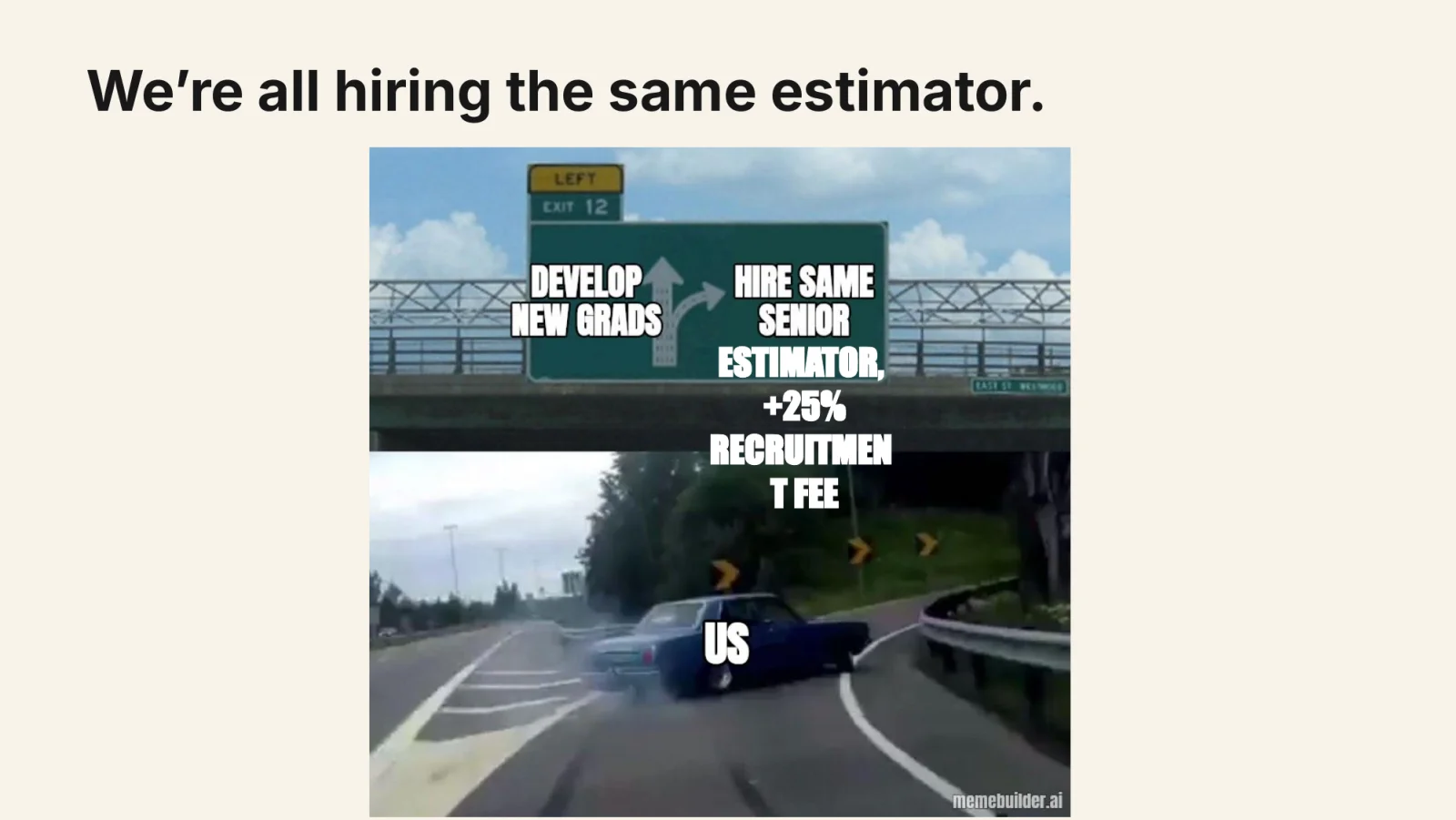
We are all trying to hire the same person.
There are good reasons to want experience. You need someone who can take responsibility for a bid, notice the exclusion everyone else skimmed past, and know which subcontractor to call. Those abilities take time to develop. When a senior estimator approaches retirement, another job posting can feel like the only practical response.
But somebody has to develop the people we all want to hire.
That was the question behind my AMG Boston keynote, Can We Manufacture Experience? I think AI gives us a useful opportunity to help graduates practise the decisions that make someone valuable. We still have to organise the work, teach it properly, and check whether they are learning.
“Become a senior estimator” is a difficult assignment to give a graduate on Monday morning. “Find out who has priced this opening” is something they can start investigating.
Consider a pipe passing through a masonry wall. The opening appears on the mechanical drawing. The mechanical quote excludes cutting it. The masonry quote says openings are by others.
Who has priced the opening?
A junior might see it on the drawing and assume somebody has it covered. An experienced estimator knows to follow the responsibility across the documents. The useful work is explaining the gap, identifying what remains uncertain, and recommending the clarification that would settle it.
AI could help bring the relevant information together. The junior still has to open the documents and explain their recommendation. The senior has a specific decision to review.
This is a manageable piece of responsibility. Before someone owns an entire estimate, they can review one trade package. Before that, they can trace a requirement, find an exclusion, and prepare a useful question.
ProWest, a Provision customer, described a practical example during our joint presentation at Precon World. A senior estimator previously built the first scope by hand. Now Provision prepares a draft, a junior checks it against the project sources, and a senior reviews it before bid day.
ProWest says that arrangement lets the same senior team cover more bids. That is a useful capacity gain. It also gives the junior more work to investigate, provided the review includes a discussion of their decisions.
A graduate still needs site visits, subcontractor conversations, and real project responsibility. I think AI could help them get more useful practice between those experiences.
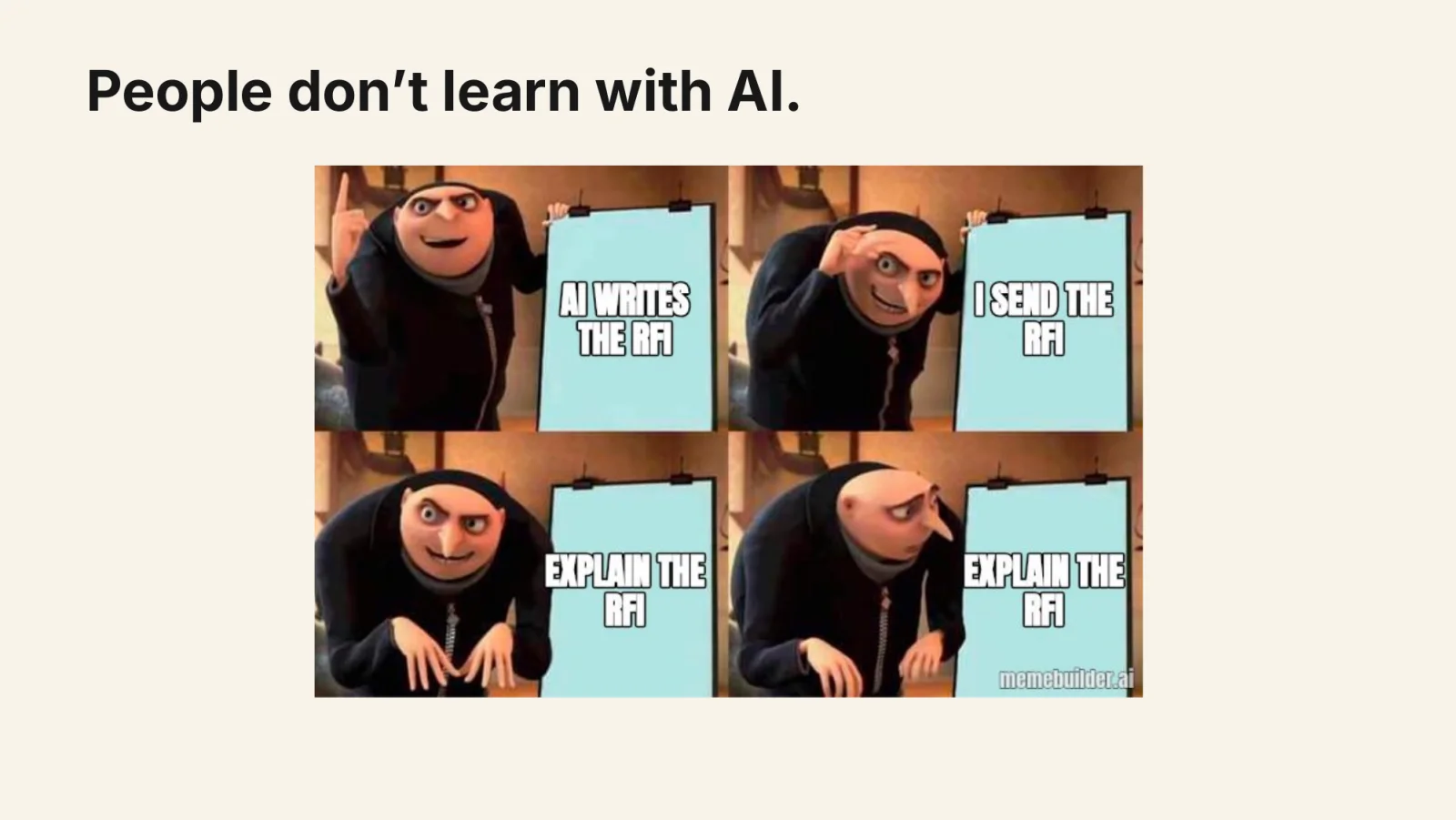
There is an obvious catch: a junior can produce a beautifully written request for information and still have no idea what the equipment does.
If the assignment is simply to finish the RFI, copying a good answer completes it. We should be fairly careful about congratulating ourselves on the training programme.
Ask for the reasoning as part of the work. Before the junior uses AI, have them explain what they think is happening. After they investigate, ask which evidence changed their mind and what they recommend doing next.
Then change the case.
Move the exclusion to another quote. Give them a version where somebody has clearly included the opening. Ask them to explain why the answer changes. Otherwise, we could train someone to flag a gap every time they see a pipe, which would get old quite quickly.
You can also give them a plausible but incorrect AI answer and ask them to challenge it. That tests whether they can check the tool when it sounds convincing.
Most of this is good teaching. AI could make it easier to prepare another exercise and help a junior investigate between reviews. An experienced person still needs to check the exercise and its explanation.
The evidence of learning comes when the junior can handle an unfamiliar case, explain their decision, and recognise when they need help. A polished RFI tells us very little about that on its own.
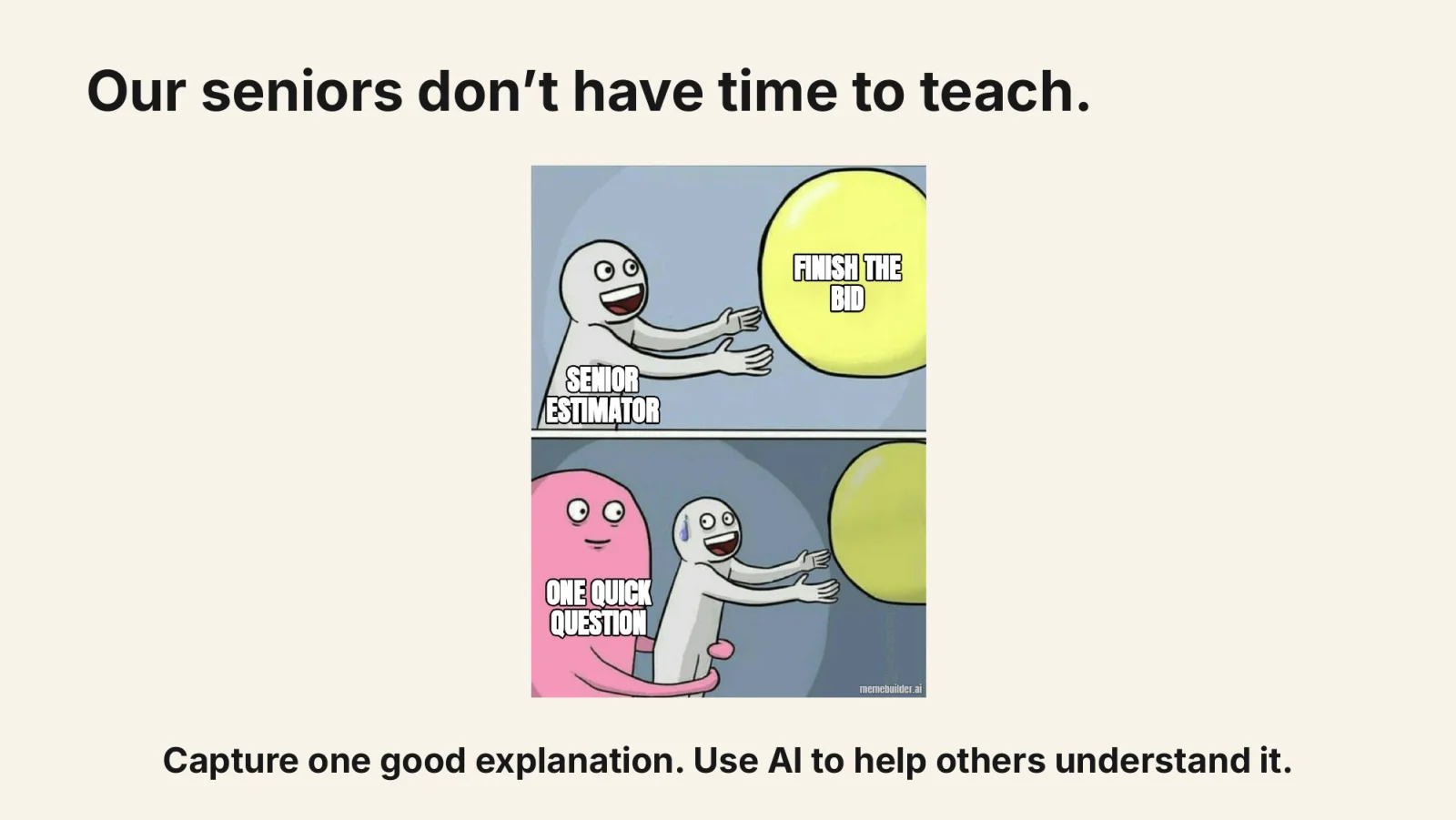
“Our seniors don’t have time to teach” is a reasonable objection. The person you want mentoring a graduate is usually the person everybody already needs.
Start with one decision they wish every new estimator understood. Pull the documents they had when they made it. Record a short explanation of what they noticed, what they assumed, and why they chose that approach.
The timing matters. By Friday afternoon, everybody knows what should have happened on Tuesday. Put the learner back on Tuesday, before the answer became obvious.
A final scope package might tell them who owns the opening. The earlier drawing, quotes, and exclusions let them work through how that responsibility was resolved.
AI could help turn that checked example into questions and variations. A junior can practise between reviews, then arrive with a specific point they need help understanding. The next graduate can use the same example.
That takes preparation. Someone has to check the material, protect time for reviews, and update the lesson when later project information changes the picture. Revisit it after buyout and field execution to see whether the original decision held up.
I find this more practical than asking a busy senior to “do more mentoring.” Capture one explanation they already give repeatedly and make it useful to more people.
A graduate’s salary, a software licence, and a senior’s time all cost money. Mentorship does not become free because we put AI in the title.
We already spend money to get experience into the business. We pay recruitment fees. We spend senior time correcting work. We pass on bids because the team cannot take on another one.
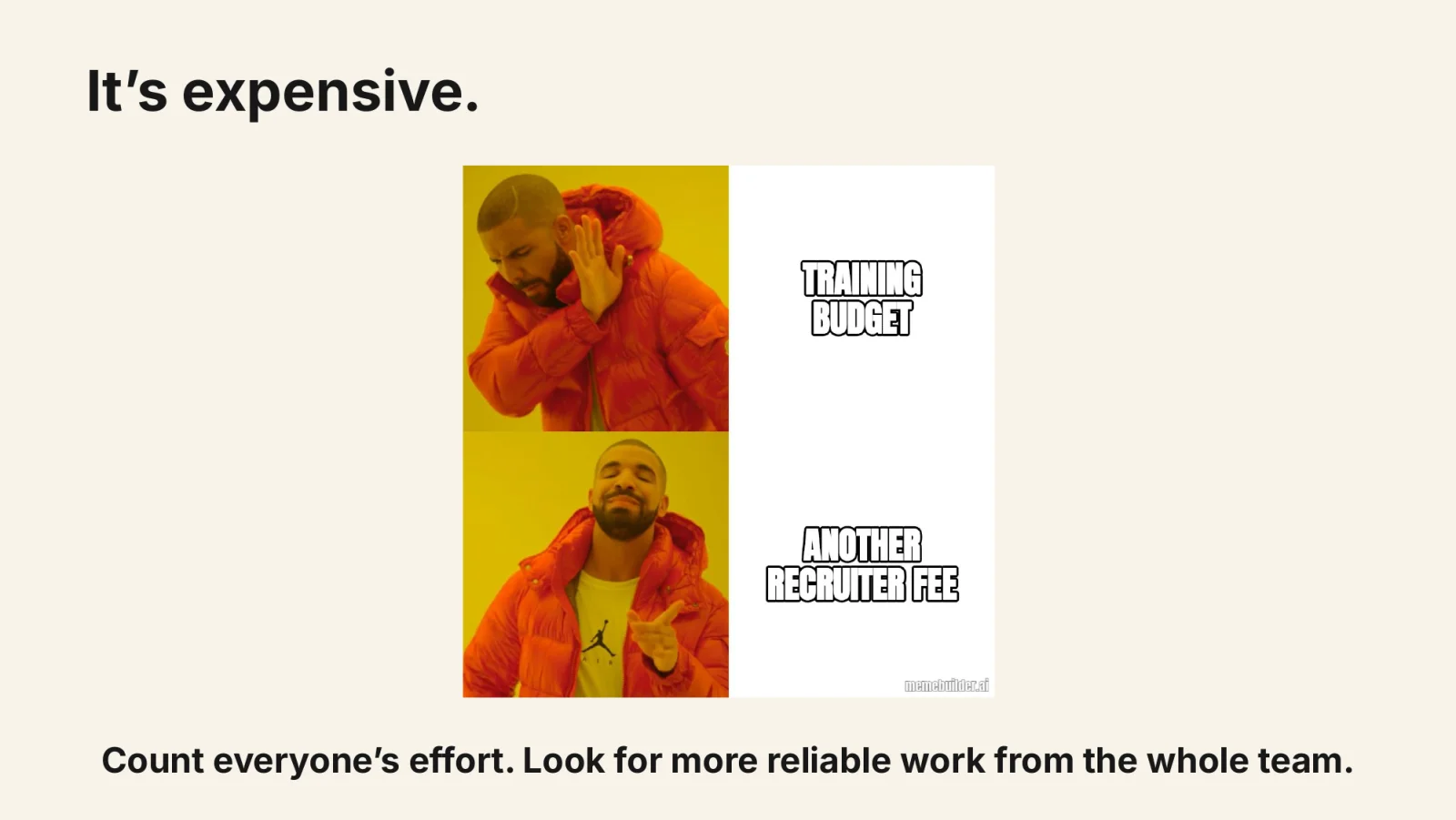
If you need someone to run a difficult bid next month, hiring experience may be money well spent. Developing people gives you more choices in the years after that.
The useful measure is how much reliable work the whole team can finish. If a junior produces twice as many packages and the senior has twice as much checking to do, we need to examine what actually improved.
Count the preparation, teaching, review, and corrections. Track serious misses. Look at how much responsibility the junior can handle with less help.
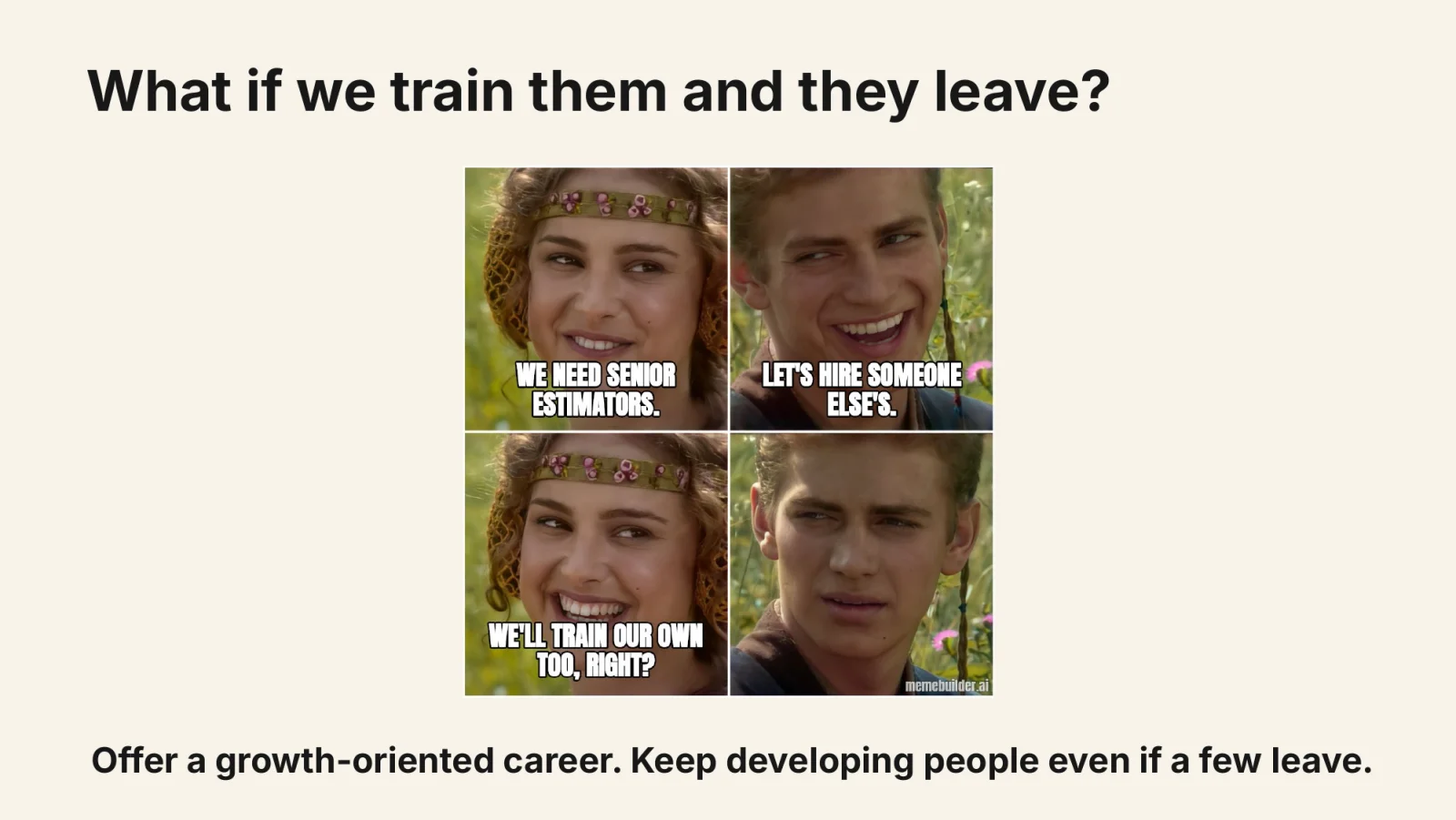
And yes, they might leave. Our estimator’s inbox is a reminder that capable people have options. A credible development path gives someone a reason to join and stay, alongside good pay, a good manager, and work they want to do. Expect to pay them more as they become more capable.
The hiring strategy we started with also depends on somebody leaving. We understand that perfectly well when we are the company doing the recruiting.
Choose one junior, one experienced reviewer, and one recurring task. Reviewing a trade scope is a useful place to start. Set a time budget that includes everyone involved.
Give the junior work where mistakes can be caught before they affect a live decision. Use checked past cases where possible, and keep senior review in place for live work.
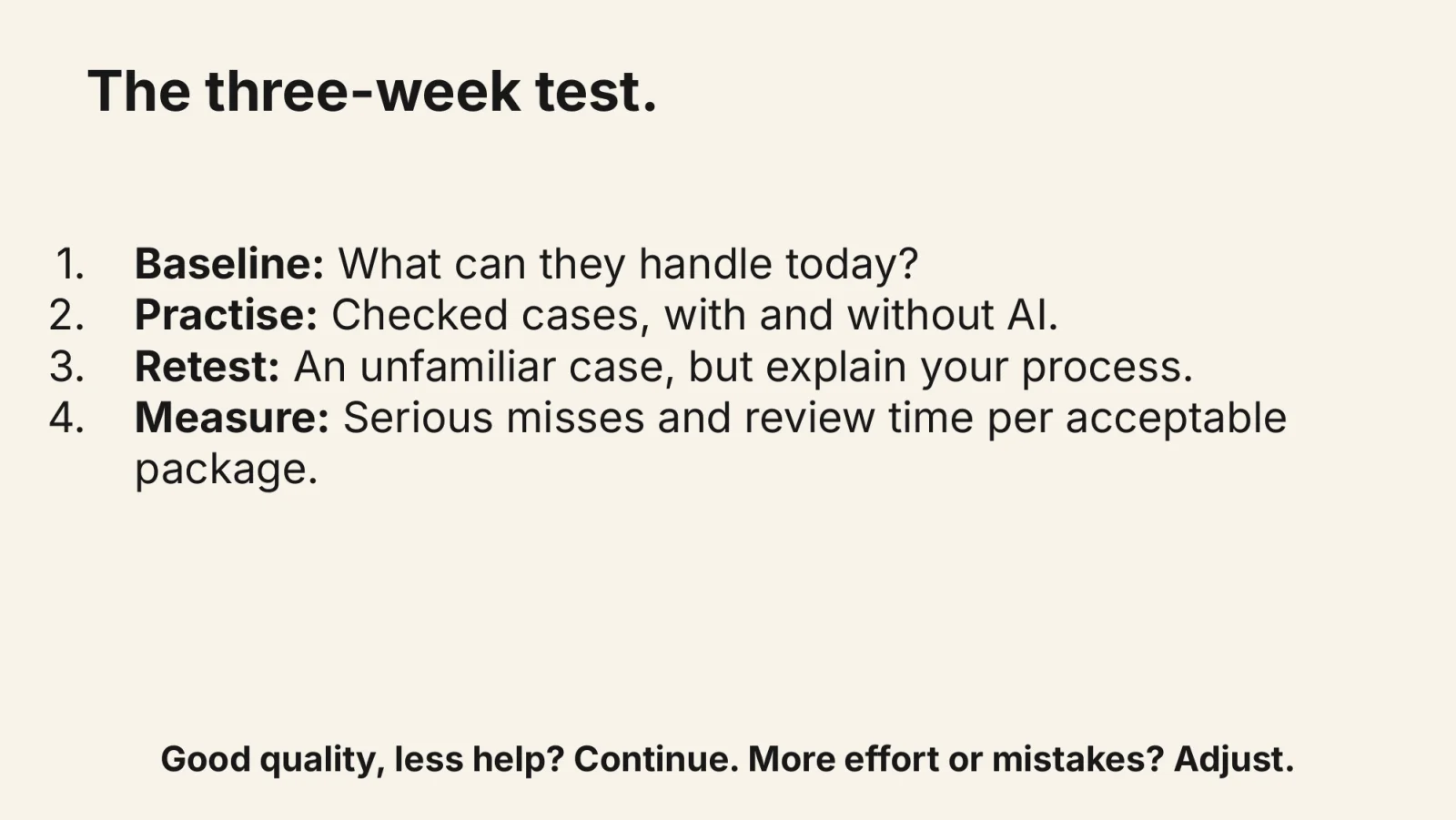
Run the test in four steps:
Three weeks can give you an initial signal. If quality holds up and the junior needs less help, continue. If mistakes increase or review becomes more demanding, adjust the approach before expanding it.
At Provision, we can contribute a workflow for reviewing scope and checking project sources. The training around it still needs a manager, a mentor, and evidence that the person is improving. I want us to hold our tools to that standard too.
The experienced estimator deserves to retire when they are ready. The graduate deserves a clear way to earn more responsibility. We can help both by making development a deliberate part of the business.
Before you post the next job asking for seven years of experience, pick one decision a junior could learn to make. Find the person who can teach it, put the first review in the calendar, and start there.
Want to try this with your team? Download the Can We Manufacture Experience? slides (PDF) for the examples, objections, and three-week test. Share them with the person who will run your first review.
Book a 30-minute demo and see Provision running on the kind of project you bid every week.
Book a demoMore Articles