Bid documents arrive. You have two weeks — maybe less. The project set is 1,400 pages. You have three other pursuits in progress. Your takeoff starts Monday.
Most estimators get through the drawings. Fewer get through the full spec book. Almost nobody reads Division 1 from cover to cover before bid day.
That's where the expensive surprises come from.
According to the Scope Gap Playbook — built on interviews with 200+ general contractors — "errors and omissions in contract documents" has been the #1 construction dispute cause for six of the last nine years (Arcadis 2025 Global Construction Disputes Report). The average U.S. dispute is now worth $60.1M.
This checklist is built for working estimators. It covers every layer of a project set in priority order, so you know where to spend your review time when the clock is against you.
Takeoff answers one question: what's the quantity? Bid document analysis answers a different one: what are we actually agreeing to build?
Those are not the same question. And conflating them is how scope gaps get born.
A $300K lead-lined glass scope item was once missed on a hospital imaging suite because it appeared in a spec section nobody cross-referenced against the drawings. The GC absorbed it under "readily inferable" language. That's not a takeoff error — it's a review failure.
A $400K roof cover board was missed on a $50M project. The drawings showed the assembly. The spec called it out. But the scope package didn't capture it. The GC recovered it only through a relational concession from the sub.
These gaps don't show up in your quantity spreadsheet. They show up on your P&L at closeout.
FMI estimates that miscommunication and bad project data drive $31 billion in annual U.S. rework costs. Twenty-six percent of that rework traces directly to communication breakdowns in the early stages of a project — stages that start with how well you read the documents before you bid.
Before you open a single drawing or spec section, take 20 minutes to map what you've received.
Rushing past this step costs hours later. If you're using Chat Agent, you can ingest the full project set and query it in under 20 seconds. But even without AI tools, five minutes of document inventory prevents a lot of mid-review confusion.
Division 1 (General Requirements) is the most skipped section in the bid process. It's also the section that creates the most GC exposure.
This is where owners embed:
The anti-pattern that kills GCs here is treating Division 1 as background noise. It isn't. A Senior PM at a Canadian ICI GC described what happens when clients push scope boundaries: "Our construction management clients expect us to find the scope gaps in the design too now. They expect us to be designers and engineers."
Division 1 is where those expectations get written into your contract. Read it before you price anything.
If you want a deeper breakdown of how "readily inferable" language creates GC exposure, the Scope Gap Playbook chapter on subcontract language covers it in detail with real operator examples.
Drawing conflicts between disciplines are one of the most reliable sources of bid-day scope gaps. Civil and structural don't always agree with architectural. MEP coordination drawings get issued on a different timeline. Details contradict plan notes.
A $45K stone-depth mismatch between civil/structural and architectural drawings on a single slab showed up only when the field crew went to install. Nobody caught it at bid because nobody compared those two drawing sets directly.
This step alone takes hours manually. Chat Agent lets you ask direct questions across your full project set — drawings, specs, and addenda — and get cited answers in under 20 seconds. Provision has answered 50,000+ queries from estimators running exactly this kind of cross-check.
The most expensive scope gaps don't live in the middle of a trade's scope. They live at the boundaries — where one sub ends and the next begins.
These are the handoff zones the Scope Gap Playbook's trade-specific chapter documents in detail. Here are the highest-risk zones by trade:
A Pre-Construction Lead at a Top-ENR Canadian GC put it plainly: "If you miss anything, they'll bill it." The subs are watching these handoffs now more carefully than ever — the days of gentleman's agreements on ambiguous scope items are over.
Addenda are the section most likely to get skimmed. They're also the section that most often changes your scope, your schedule, and your price.
Review each addendum in the order it was issued. Changes in Addendum 2 sometimes supersede Addendum 1. Scope clarifications in Addendum 3 sometimes re-open scope questions you thought were closed.
If an addendum revises a drawing sheet, make sure your takeoff is based on the revised sheet, not the original. This sounds obvious. It isn't, when you're under deadline pressure on three pursuits at once.
Once you've completed your review, compare your scope package — or your subcontract scopes — against what the documents actually require.
The anti-pattern here is the boilerplate scope package. Copying last project's drywall scope onto this project's drywall scope works fine until the specs require wall blocking that wasn't in the last job. Or the hollow metal door frames are in a different sub's scope on this project.
As an Estimating Manager at a Canadian ICI GC described it: "Pre-con is working in the scope sheet world and project management is working in the scopes of work." The gap between those two worlds is where change orders get born.
Scope Agent generates complete scope-of-work packages directly from your construction documents in under 60 minutes — replacing 30–40 hours of manual work per bid. Every item is traced back to the drawings and specs that sourced it. It's not a template tool; it reads your specific project set.
You can also use Provision's free scope of work template as a starting point for manual audits.
Every gap, conflict, or ambiguity you find during your review is a potential RFI. Don't save these for bid day morning.
Log them as you go. Submit them as early as the bid schedule allows. If the owner doesn't respond before bid day, that ambiguity becomes your exposure — or your clarification and exclusion.
A structured RFI log also gives you documentation. If a dispute arises at buyout or in the field, you have evidence that you flagged the ambiguity before you bid.
The structured checklist above works. It's also slow. A thorough manual review of a complex project set takes 30–40 hours — and most estimating teams don't have that time on every pursuit.
Purpose-built tools are changing that math.
Chat Agent reads your full project set — drawings, specs, contracts, addenda — and answers specific questions with cited sources in under 20 seconds. Provision has processed 100,000+ documents and answered 50,000+ queries from GC teams. When you need to know what the spec says about roof cover board on sheet A4.2, you ask it directly instead of hunting through 800 pages.
Risk Review runs your contract documents against a pre-built risk checklist with 99% accuracy. Every flagged item is cited to the exact clause, section, or page. It cuts contract and spec review time by 80% — and it's finding risks in documents that manual review misses.
Scope Agent generates a complete scope-of-work package from your construction documents in under 60 minutes. Provision has reviewed over $100 billion in project value and found more than 1,000,000 risks across those reviews. On a head-to-head test using a live hospital project's plumbing drawings — every line item validated against source — Scope Agent captured 145 items with zero fabricated entries. The comparison model captured 96 items and fabricated 18.
These aren't tools that replace the estimator. They're tools that let you do this checklist faster and catch more of what a rushed manual review misses.
If you want to see what a structured bid document review looks like with AI in the workflow, book a demo and we'll walk through a live project set.
Division 1 (General Requirements) carries the most contract risk and is most often skipped. It contains liquidated damages, inferred-scope language, schedule obligations, and owner-furnished equipment scope. Read it before you start takeoff. Errors here compound across every other section of the bid.
A thorough manual review of a complex commercial project set takes 30–40 hours. Most estimating teams don't have that on every pursuit. Prioritizing Division 1, cross-discipline conflicts, addenda, and trade handoff zones gives you the highest return on review time. AI-assisted review can cut that time significantly without sacrificing coverage.
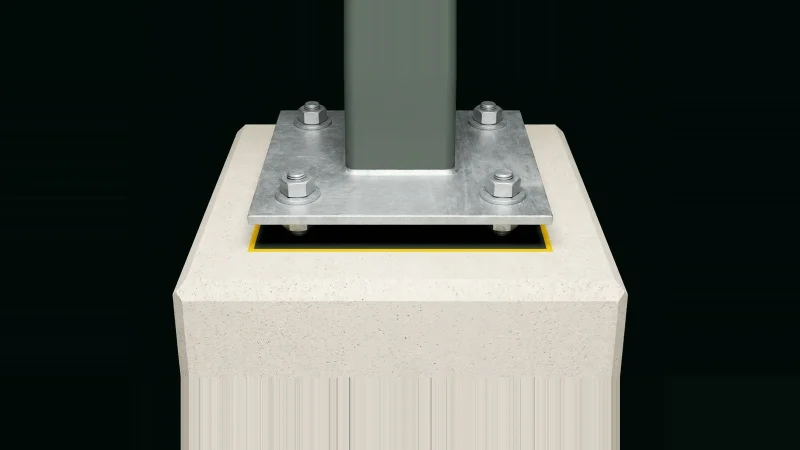
The most common gaps are at trade handoff zones — where one sub's scope ends and another's begins. High-risk areas include MEP-to-envelope transitions, base plate grouting, roof cover board assemblies, and generator field conditioning. These gaps rarely appear in takeoff. They appear at buyout and in the field.
"Readily inferable" language in Division 1 or supplementary conditions shifts scope risk to the GC. It means the contractor is responsible for work that a competent contractor should have anticipated, even if it isn't explicitly shown or specified. This language has caused six- and seven-figure losses on commercial projects when estimators missed scope that was "implied" by the documents.
Submit RFIs as early as the bid schedule allows — ideally in the first half of the bid period. Late RFIs often go unanswered before bid day. If you don't get a response, the ambiguity becomes your exposure. A structured RFI log also gives you documentation if disputes arise at buyout or during construction.
Addenda can change scope, revise drawings, modify the bid form, or alter schedule requirements. Review each addendum in the order it was issued. Confirm you're working from the latest drawing revision on every sheet. An addendum issued three days before bid day can invalidate hours of takeoff if you miss it.
No — but purpose-built AI tools change the speed and coverage of that review significantly. Tools like Chat Agent answer specific document questions in under 20 seconds with cited sources. Scope Agent generates complete scope packages from your project set in under 60 minutes. The estimator still makes the judgment calls — AI tools handle the document search and extraction that currently burns most of the review time.
Scope Agent reads your full project set and builds a complete scope package in under 60 minutes.
See Scope Agent workMore Articles