A lump sum contract is a fixed-price bet. You price the work, the owner signs, and anything that costs more than you planned comes out of your margin. That is the deal.
When material costs are stable, that bet is manageable. When input prices climb at a 12.6% annualized rate, the bet gets harder to win.
The issue is not the materials you priced. Those are in your number. The issue is the materials you did not price because a scope item was unclear, omitted from a subcontractor's bid, or buried in a specification section nobody flagged.
That is what a scope gap is: work that is reasonably part of the project but has no line item in your estimate. At 2024 input prices, a missed roof cover board might cost you $400,000. At 2026 prices, that same gap hits harder before you even start the conversation about who is responsible.
A 12.6% annualized increase in nonresidential construction input costs is not evenly distributed. Some material categories are rising faster. Some trades are absorbing more of the cost than others. But across the board, the same scope item that was adequately priced in 2024 may now be underpriced by a meaningful margin.
Consider a few scenarios:
The math is simple: a fixed-price contract locks your revenue. Rising input costs raise the floor on what it actually costs to build. Every unpriced item widens the gap between those two numbers.
This is the central argument in The Scope Gap Playbook, which draws on research with more than 200 general contractors across North America. Scope gaps are produced by a small set of consistent habits, most of them baked into how pre-construction teams work under time pressure.
The most common anti-pattern is also the most dangerous: writing scope packages from boilerplate rather than from the actual drawings and specifications for the project in front of you. When material costs are rising and "as-built" costs differ from prior projects, a boilerplate scope is a liability.
A Pre-Construction Lead at a Top-ENR Canadian GC put it this way: "If you miss anything, they'll bill it." That was true before tariffs. It is more true now.
Several habits that were marginal risks in a stable cost environment become significant exposures when input prices are elevated:
These examples come from operator interviews conducted for The Scope Gap Playbook. They illustrate the kind of gaps that exist on most large commercial projects, and why they are more expensive to absorb in 2026 than they were two years ago.
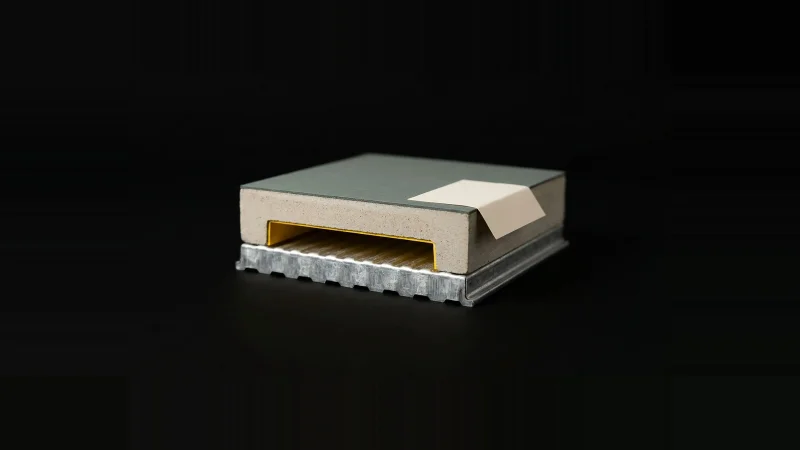
On a $50M commercial project, a roof cover board was not explicitly assigned in the envelope scope. No trade claimed it. The GC absorbed the cost and recovered it only through a relational concession from the subcontractor, not through contract language.
At 2026 input prices, the same gap costs more to close, and the relational concession is harder to extract. Subcontractors watching their own margins are not volunteering to absorb costs that were not in their bid.
On a hospital imaging suite, lead-lined glass was omitted from the scope package. The spec called for it. The GC absorbed the cost under "readily inferable" language in the contract.
This is the kind of gap that experienced estimators know to look for in healthcare specs. But on a project with 2,000 pages of documentation, finding it under time pressure requires deliberate process, not luck.
On a single slab, civil, structural, and architectural drawings showed different stone depths. The conflict was not caught before bid day. The discrepancy cost $45,000 to resolve in the field.
At current labor and material rates, that same drawing conflict costs more to resolve today than it would have in 2024.
This is not a novel observation, but it bears repeating in the current cost environment. Under a lump sum contract, the owner's exposure is capped. Yours is not.
Contract language around "readily inferable" scope, "work reasonably inferable from the contract documents," and similar phrases is designed to broaden GC responsibility without explicitly pricing it. When input costs are high, that language is more expensive than it looks.
A Senior PM at a Canadian ICI GC framed it plainly: "Our construction management clients expect us to find the scope gaps in the design too now. They expect us to be designers and engineers."
That expectation is encoded in the contract. And the cost of meeting it is rising.
For a deeper look at how contract language creates scope exposure, the chapter on subcontract language and scope in The Scope Gap Playbook is worth reading before your next bid.
The GCs with the best margins in a high-cost environment are not doing something exotic. They are doing the basics more consistently than their competitors. The Scope Gap Playbook identifies eight habits that separate high-margin pre-construction teams from the rest. Three of them matter most when input costs are volatile.
Start every scope package from the actual drawings and specifications for this project. Use templates as a starting point, not as the answer. A template is a floor. The project documents are the ceiling.
This sounds obvious. It is not universal. Under time pressure, teams reach for the last similar job. That habit is affordable when costs are stable. It is expensive when they are not.
Every scope line should cite the section, page, and detail number that governs it. "As per plans and specs" is not a reference. It is a gap in disguise.
When a sub disputes coverage, a specific document reference gives you a position. A generic reference gives you an argument.
Before the scope package goes to subs, one person reviews it against the full project document set. Not the drawings only. Not the specs only. Both, together, including addenda.
The goal is to catch conflicts, missing trade assignments, and specification callouts that did not make it into the scope. Done right, this review takes time. Done with the right tools, it takes less time than you expect.
The honest answer is that AI does not replace the judgment of an experienced estimator. It does replace the parts of pre-construction that are time-consuming and repetitive but not particularly dependent on experience.
Reading 2,000 pages of specifications to find every trade-specific callout is repetitive. Cross-referencing architectural, structural, and MEP drawings for conflicts is repetitive. Flagging contract clauses that shift scope risk to the GC is repetitive.
Provision's Scope Agent reads the full project document set, including drawings and specifications together, and generates a complete scope package in under 60 minutes. It replaces 30–40 hours of manual review per bid. With input prices running at a 12.6% annualized rate, cutting 30 hours of prep time per pursuit and catching more scope items in that review is a margin decision, not just a productivity decision.
Scope Agent achieves 97% accuracy on scope item extraction, validated against human estimator performance on the same exercise. The human baseline on comparable work is 91.3%, typically over four or more days per project.
For contract risk, Risk Review flags every clause that creates GC exposure, cited to the exact section and page. It covers "readily inferable" language, supplementary conditions that expand GC responsibility, and the kind of spec cross-references that cause $300,000 surprises on hospital projects. Risk Review delivers a 99% accuracy rate on risk identification and cuts contract and spec review time by 80%.
If you want to see how those tools perform on a live project document set, request a demo and we will run it on your documents.
Not every scope gap carries the same risk in a high-cost environment. Some trade categories have more exposure right now because their input costs are rising faster, or because the specification complexity makes gaps more likely. For detailed trade-by-trade examples, the trade-specific scope gaps chapter of the playbook covers the most common omissions by trade.
You cannot control input costs. You can control scope coverage. These are the actions that move the needle before bid day:
A Senior PM on an owner's rep team put the ROI calculation simply: "If we could catch three scope gaps or three missed items on every scope of work, then this thing pays for itself." At 2026 input prices, catching three scope gaps per bid is worth more than it was two years ago.
When input prices rise, every unpriced scope item costs more to absorb. A scope gap that was a $200,000 exposure at 2024 material prices may cost significantly more to close at 2026 prices. On a fixed-price contract, that difference comes out of GC margin. The gap between what you priced and what it costs to build widens as material costs rise.
A scope gap is work that is reasonably part of a project but has no line item in the estimate or subcontract. It may appear in the specifications, be implied by the drawings, or fall in the overlap between two trades. When it surfaces during construction, the GC typically absorbs the cost on a lump sum contract.
Readily inferable language requires the contractor to perform work that is reasonably implied by the contract documents, even if it is not explicitly described. On a lump sum contract, this language expands GC responsibility beyond what is written. It is one of the most common sources of scope dispute on commercial projects.
MEP, structural steel, and envelope trades carry elevated risk in 2026 because their input costs are most sensitive to tariff-driven increases. Specialty items like lead-lined glass, generator field conditioning, and roof cover board are also high-risk because they are specification-heavy and commonly missed during document review under time pressure.
The most reliable protection is a tighter scope package before bid day. That means starting from actual drawings and specifications, assigning every trade explicitly, citing specific document references, and running a pre-issue review against the full project document set. Contract risk review before signing also protects against clauses that expand GC liability after award.
Yes, when they are purpose-built for construction documents. Provision's Scope Agent reads the full project document set, including drawings and specifications, and generates a complete scope package in under 60 minutes with 97% accuracy on scope item extraction. Risk Review identifies contract risk clauses with 99% accuracy and cuts review time by 80%. Generic AI tools do not read drawings and do not produce the structured trade-by-trade outputs estimators need.
According to the Arcadis Global Construction Disputes Report, the average North American construction dispute value reached $60.1 million in 2024. Errors and omissions in contract documents have repeatedly ranked as the top dispute cause in North America across the years Arcadis has tracked the data.
Scope Agent reads your full project set and generates a complete scope package in under 60 minutes.
See Scope Agent workMore Articles