Elevators are specialty work. Most GCs self-perform almost nothing in the vertical transportation trade. That makes the scope package the only real protection between bid day and a dispute.
When that package is vague, the subcontractor fills in the blanks — in their favor. As one Pre-Construction Lead at a Top-ENR Canadian GC put it: "If you miss anything, they'll bill it."
The dollar exposure is real. According to the Provision Scope Gap Playbook, a $300K lead-lined glass scope gap on a hospital imaging suite was absorbed by a GC under "readily inferable" contract language. Elevator work carries the same exposure — and sometimes more, because the interface between the GC's civil/structural work and the elevator sub's scope is rarely clean.
Average U.S. construction dispute value hit $60.1M in 2024, according to the Arcadis 2025 Global Construction Disputes Report. Errors and omissions in contract documents have been the top dispute cause in six of the last nine years. Elevator scope is a recurring source of exactly that kind of error.
The elevator sub installs the equipment. But the GC is responsible for everything the elevator requires to function. That interface — between the GC's work and the sub's work — is where scope gaps live.
The most common fault lines:
If your bid package doesn't explicitly assign each of these items, you will get an RFI. Or worse — a change order after the sub is already on site.
The hoistway must be complete before the elevator sub can work. Define "complete" explicitly. That means:
Reference the specific drawing number. "As per plans" is not a scope item — it's a dispute waiting to happen. Drawings-first, not boilerplate-first is Habit 1 in the Scope Gap Playbook, and elevator work is exactly why that habit exists.
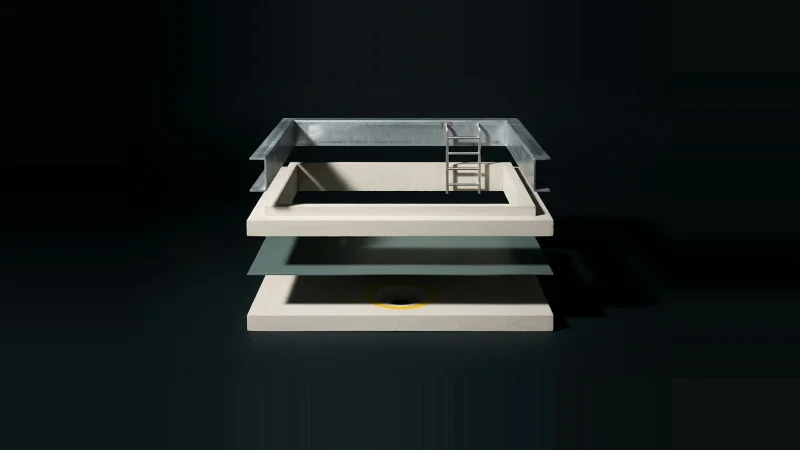
The pit is GC-furnished. The scope package must state who is responsible for each of the following — and reference the applicable spec section:
| Pit Item | Typical Responsibility | Common Gap |
|---|---|---|
| Waterproofing / dampproofing | GC / waterproofing sub | Spec says "elevator contractor to verify" — who acts on deficiencies? |
| Floor drain / sump pit | Plumbing sub | Often omitted from plumbing scope entirely |
| Pit lighting and outlet | Electrical sub | Code-required; missing from electrical takeoff on 30%+ of projects |
| Pit access door / ladder | GC / door sub | Shown on elevator drawings, missed in door hardware schedule |
| Sump pump (if required) | Plumbing sub | Spec references elevator sub; elevator sub excludes it |
Every one of these can become a standalone RFI or change order. The sump pump gap is particularly common — the spec references the elevator contractor, the elevator contractor excludes it, and the plumbing sub never picked it up.
Elevator power requirements vary significantly by system type — hydraulic, traction, MRL (machine room-less). The scope package must tie to the specific equipment the elevator sub is providing.
Assign clearly:
If the elevator is going into a healthcare facility, add emergency power (EPS) requirements. Hospital elevators often require connection to the emergency generator system. That coordination — between the electrical sub, the generator sub, and the elevator sub — is almost never spelled out in a standard bid package.
Traction elevators need a machine room. MRL systems need a machine space — typically at the top of the hoistway. Both require conditions the GC provides:
On MRL systems, the machine space is often inside the hoistway structure. The interface between the structural sub, the elevator sub, and the GC's finish work gets complicated fast. Detail it in the scope package — don't leave it to the pre-con meeting.
Guide rail brackets and overhead sheave beams require structural support. Those supports are usually furnished and installed by the structural steel sub — but they need to be coordinated against the elevator manufacturer's layout drawings, which often don't exist at bid time.
The scope package needs to address this explicitly:
A $45K slab conflict between civil, structural, and architectural drawings — cited in the Scope Gap Playbook — shows how drawing conflicts between trades become real cost. The same dynamic plays out when elevator layout drawings conflict with structural shop drawings.
This is one of the most frequently disputed items in elevator scope. Hoistway (landing) doors, frames, and sill angles can fall to the elevator sub, the door sub, or both — depending on the spec.
Check Division 14 (Conveying Equipment) and Division 08 (Openings) carefully. Conflicts between these two spec sections are common. When they conflict, the GC holds the risk.
State explicitly in the scope package:
Elevator commissioning is regulated. In most jurisdictions, an independent elevator inspection is required before a certificate of occupancy can be issued. Who schedules it? Who pays the inspection fee? Who is responsible if the elevator fails the first inspection?
Healthcare projects add another layer. Hospital elevators may require:
If these items aren't in the scope package at bid time, they surface as change orders after contract award. The hospital elevator market is growing — construction starts in the healthcare sector continue to increase in 2026 — and GCs that don't tighten their vertical transportation scope packages are going to feel it.
Elevator subs almost always include a short warranty period — typically one year — and then expect a separate maintenance contract. The scope package should state clearly:
Owners increasingly ask GCs to include multi-year maintenance agreements in elevator contracts. If you don't address this at bid, you're negotiating it after contract award — at a disadvantage.
From the Scope Gap Playbook, the most common mistakes GCs make with elevator scope:
As one Estimating Manager at a Canadian ICI GC noted: "We have less subs who just kind of a gentleman's agreement… they've become more quick to clarify that we're not including that one piece of scope."
That's the market in 2026. Elevator subs are not carrying ambiguous scope items out of goodwill. They're clarifying — and billing.
The Eight Habits from the Scope Gap Playbook apply directly to vertical transportation scope. The most critical for elevator work:
For teams running multiple pursuits simultaneously, Provision's Scope Agent reads the full project set — drawings, specs, and addenda — and generates complete scope packages in under 60 minutes. It flags cross-division conflicts like the Division 14 / Division 08 hoistway door overlap automatically, instead of leaving them for the sub to discover on bid day.
Teams using Provision's Chat Agent can query the full document set mid-pursuit — "What does Spec Section 14 21 00 say about pit requirements?" — and get a cited answer in under 20 seconds. That's faster than hunting through a 2,000-page spec book at 4 PM on bid day.
If your pre-construction team handles multiple elevator projects per year, reviewing what a GC preconstruction workflow looks like with AI-assisted scope generation is worth the time. The EllisDon case study shows how a national GC used Provision to reduce scope review time by 80% on complex projects.
Use this as a starting floor — not a ceiling — for every elevator bid package:
For a structured starting point on scope packages across all trades, the Provision scope of work template is a free resource built for GC pre-construction teams.
Elevator scope gaps don't stay small. A missed pit drain becomes a plumbing RFI. A vague power supply clause becomes a $40K electrical change order. A hoistway door conflict between Division 08 and Division 14 becomes a buyout argument after contract award.
The GC's job is to close those gaps before bid day — with specific, drawing-referenced scope language that leaves the elevator sub no room to clarify or exclude. The market in 2026 is too tight for gentleman's agreements on vertical transportation scope.
Build the scope package like every sub will read every word and bill everything you left out. Because they will.
A complete elevator scope of work covers hoistway preparation, pit requirements (waterproofing, drain, lighting, access), machine room conditions, power supply and feeder runs, structural embeds for rail brackets, hoistway door assignments, and commissioning and inspection responsibilities. Each item must reference the specific drawing or spec section — not just "per plans."
Pit waterproofing is typically GC or waterproofing sub scope. Pit drainage and sump pumps typically fall to the plumbing sub — but the elevator spec often references the elevator contractor, creating a gap. Assign both items explicitly in the bid package and reference the applicable spec section to eliminate the ambiguity.
The GC's electrical sub typically runs the power feeder from the main electrical panel to the machine room or machine space. The disconnect switch is often GC-furnished but elevator sub-installed. Temporary power during installation is usually GC-provided. On healthcare projects, emergency power (EPS) connection is an additional coordination requirement.
Hospital elevators trigger additional requirements beyond standard commercial work: emergency power system (EPS) connections, infection control protocols during installation, integration with nurse call or security systems, fire service recall testing, and sometimes seismic certification. These items are almost never covered in a standard elevator bid package and surface as change orders after contract award.
Division 14 (Conveying Equipment) and Division 08 (Openings) sometimes both reference hoistway landing doors, frames, and sill angles — without clearly assigning responsibility. When the two spec sections conflict, the GC typically holds the risk. Resolve the conflict explicitly in the scope package before the bid goes out.
Elevator manufacturer layout drawings are often not available until after equipment selection. The scope package should assign responsibility for coordinating the final layout drawing against structural shop drawings, and specify what happens if the two conflict. Assign a specific sub — usually the elevator contractor — to flag any structural conflicts within a defined number of days after layout drawing release.
Purpose-built construction AI like Provision's Scope Agent reads the full project set — drawings, specs, and addenda — and generates trade-specific scope packages in under 60 minutes. It flags cross-division conflicts automatically, such as the Division 08/14 hoistway door overlap. Teams that have processed bids through Provision report catching scope gaps before bid day that would otherwise have surfaced as change orders.
Scope Agent reads your full project set and flags Division 08/14 conflicts, missing pit items, and power supply gaps in under 60 minutes.
See Scope AgentMore Articles