Concrete is one of the first trades to commit on a project and one of the last to be fully resolved. By the time a structural slab is poured, the GC may have absorbed costs that were never clearly assigned — or be in a fight with the concrete sub over who owns the pump, the base plate grout, or the gypcrete that doesn't match the spec.
These aren't edge cases. They're the same Division 03 scope gaps that show up project after project. And according to the Provision Scope Gap Playbook, concrete is one of the top trade categories for unassigned scope at buyout.
This guide breaks down where those gaps live, what they cost, and how estimators and pre-construction teams can close them before they become change orders.
Concrete is spread across multiple spec sections, multiple drawing disciplines, and multiple trades. The structural drawings show the slab. The architectural drawings show the finish assembly. The MEP drawings show penetrations, trenches, and equipment pads. And the civil drawings show the subgrade.
When those documents conflict — and they often do — the scope gap lives at the intersection. Nobody owns it explicitly. The concrete sub prices what they see in their discipline. The GC assumes it's covered. At buyout, both sides are surprised.
Per the Scope Gap Playbook, "errors and omissions in contract documents" has been the leading cause of construction disputes for six of the last nine years, according to the Arcadis 2025 Global Construction Disputes Report. The average U.S. dispute value in 2024: $60.1 million.
Division 03 is fertile ground for exactly that kind of dispute.
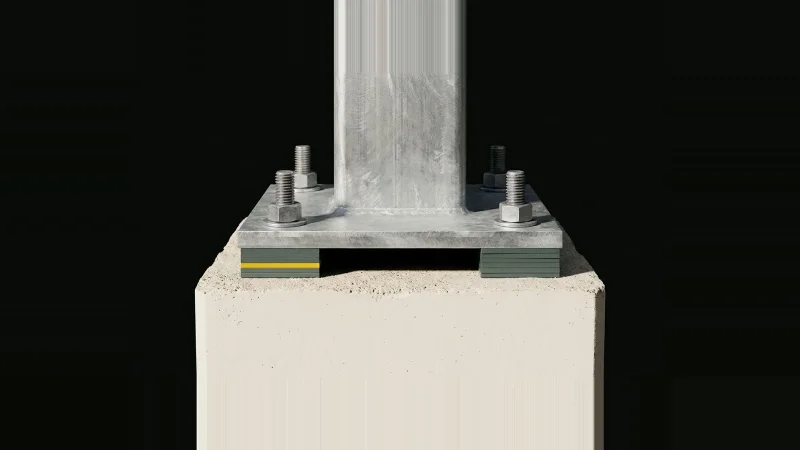
Structural steel anchor bolts are set by the concrete sub. Steel erection is handled by a steel sub. Base plate grouting — the non-shrink grout that goes between the base plate and the slab — sits in the gap between those two scopes.
The concrete sub says it's a steel scope item. The steel sub says it's a concrete item. The spec reference sits in Division 03 or Division 05, depending on the project. Neither sub prices it without an explicit callout in their scope of work.
The result: the GC either absorbs the cost or writes a change order to one of the subs — and fights about it for two weeks. On a mid-size commercial project, base plate grouting can run $15,000 to $40,000. On a project with dozens of steel column bases, it's more.
The fix is simple: explicitly assign grouting of structural base plates in both the concrete and steel scope packages. State which sub owns it. Reference the spec section. Don't leave it to inference.
Concrete pumping is rarely included in a sub's base bid unless the scope of work says so. Most concrete subs price direct chute placement by default. If the structural drawings require pump access — because of the building footprint, the pour height, or site constraints — the pump cost doesn't appear in the bid unless someone asks for it explicitly.
The estimator reviews the bid, sees a number that looks competitive, and moves on. On bid day, the pump is assumed to be covered. At buyout, it's a $20,000 to $80,000 open item.
This is a textbook case of the anti-pattern the Scope Gap Playbook calls "just send the bid docs." The structural drawings show the pour locations. The site plan shows the access constraints. The pump requirement is inferable — but it needs to be stated to be priced.
As one Pre-Construction Lead at a top-ENR Canadian GC put it: "If you miss anything, they'll bill it."
A scope package for Division 03 should explicitly include or exclude concrete pumping for each pour location. If pumping is required, specify who supplies the pump, who operates it, and who pays for the pump truck mobilization.
This is the most expensive and least-discussed Division 03 scope gap. Slab assembly conflicts happen when the structural drawing, the architectural drawing, and the finish spec describe the same floor area differently.
The structural drawing shows a 5" concrete slab on grade. The architectural drawing shows a floor finish assembly that assumes 6" of slab plus a 1.5" gypcrete topping. The MEP drawing shows trench drains that were set based on the structural elevation. And the spec calls the topping "self-leveling underlayment" — which a different sub reads as their scope.
Nobody caught the conflict during pre-construction. The concrete sub pours to the structural elevation. The finish sub quotes the architectural assembly. At rough-in, the MEP trench drain is 1.5" too high. The slab has to be ground down or the drain has to move — neither of which was in anyone's budget.
The Provision Scope Gap Playbook documents a $45,000 stone-depth mismatch between civil, structural, and architectural drawings on a single slab pour. That's one conflict, one project. Multiply it across a floor plate with multiple finish zones and you're talking about a six-figure rework problem — which maps directly to FMI's finding that bad project data accounts for 22% of the $31 billion in annual U.S. rework costs.
Base plates, pumping, and slab conflicts are the big three. But there are others that show up regularly in GC pre-construction workflows.
Interior concrete curbs — around mechanical rooms, electrical rooms, or loading docks — are often shown on the mechanical or architectural drawings. They're rarely in the concrete sub's takeoff unless called out explicitly. The same applies to equipment pads. MEP subs assume the GC provides them. The concrete sub assumes MEP coordinates. Nobody coordinates.
Slab openings for pipes, conduit, and ducts are often cut after the pour. Who patches them? The concrete sub is usually off-site by then. The MEP sub cut the opening. The spec assigns patching to the contractor responsible for the opening — which is correct language but rarely makes it into the subcontract scope of work. At closeout, the open core-drill holes become a punch list item with no clear owner.
Vapor barrier is a Division 07 material that installs before a Division 03 pour. It's often bid by the concrete sub as "furnished by others, installed by concrete." Or it's bid by a separate waterproofing sub but assumed to be in the concrete scope. If the scope packages don't align, you either install it twice or install it never.
Cold-weather requirements are in the spec — hoarding, heating, curing blankets. But the scope of work may not reference them. If the project runs into November, the concrete sub may argue that temporary heat and enclosures were not in their scope. The cost of cold-weather protection on a large pour can run $30,000 to $100,000. Assign it explicitly or build it into the GC's general conditions budget — don't leave it unaddressed.
Most of these gaps don't happen because estimators are careless. They happen because of process habits that look efficient on the surface but create exposure downstream.
The Scope Gap Playbook identifies several anti-patterns that recur across GC firms. Three show up constantly in Division 03:
This is the most cited anti-pattern in the playbook. A concrete sub writes "all work as per plans and specs" in their bid. The estimator takes it as full coverage. It isn't. "Plans and specs" doesn't tell you who owns the pump, who patches the sleeves, or which drawing governs the slab elevation. It's a placeholder, not a scope of work.
A concrete scope package from a similar project gets pulled and reused. Base plates were covered last time — assumed covered this time. But last project had no structural steel. This one has 180 column bases. The scope gap is invisible until buyout.
Concrete bids come in late. The estimator compares numbers fast, checks the total, and moves on. No time to cross-check what's included versus what the drawings require. As one Estimating Manager at a Canadian ICI GC noted: "We have less subs who just kind of have a gentleman's agreement… they've become more quick to clarify that we're not including that one piece of scope." Subs are protecting themselves. GCs need to do the same.
The Scope Gap Playbook lays out eight habits that separate high-margin GCs from average ones. Five apply directly to concrete scope management.
A downloadable scope of work template is a useful starting point — but it only works if you populate it from the actual project documents, not from memory.
The fundamental problem with Division 03 scope gaps is that finding them requires reading across multiple document sets simultaneously — structural drawings, architectural drawings, MEP drawings, civil drawings, and the Division 03 spec sections. That cross-referencing takes time most pre-construction teams don't have.
Provision's Scope Agent ingests the full project set — drawings and specs — and generates a complete scope-of-work package in under 60 minutes. It surfaces conflicting callouts between disciplines, flags unassigned items like pumping and base plate grouting, and produces structured scope language that estimators can review and edit rather than write from scratch.
That's the difference between catching a $45,000 slab conflict in pre-construction versus finding it during rough-in.
If your team is already managing ten to fifteen pursuits at once, Chat Agent lets anyone on the team ask plain-language questions about the project documents and get cited answers in under 20 seconds. "Does the spec assign concrete pumping to the GC or the sub?" is a 20-second query, not a 45-minute document hunt.
Provision has reviewed more than $100 billion in project value and processed over 66,000 documents. Scope gaps in concrete show up in the same places — project after project. The patterns are knowable. The question is whether your process catches them before bid day.
See how EllisDon used Provision to identify scope gaps that saved $1.8 million on a single project.
Concrete scope gaps don't come from complex engineering problems. They come from unassigned items at the intersection of trades, drawings that contradict each other, and scope packages that rely on inference instead of explicit language.
Grouting base plates, concrete pumping, and slab assembly conflicts are the top three. They're also entirely preventable with the right pre-construction process.
The GCs with the best concrete margins aren't smarter. They're more systematic. They read the drawings before writing the scope. They assign every interface explicitly. And they review the scope package before the subcontract goes out — not after the sub sends the first change order.
For a deeper breakdown of trade-specific scope gaps across concrete, MEP, envelope, and specialty trades, read the full Division 03 and trade-specific chapter of the Provision Scope Gap Playbook.
A concrete scope gap is an item of work shown on the project drawings or spec that is not explicitly assigned to any subcontractor. Common examples in Division 03 include grouting of structural base plates, concrete pumping, vapor barrier installation, and sleeve patching. These items go unpriced until buyout or field execution, then surface as change orders.
There is no universal standard. Responsibility depends on how the subcontract scope packages are written. It is commonly assigned to either the concrete sub or the structural steel sub. If neither scope package assigns it explicitly, no one prices it — and the GC absorbs the cost or issues a change order at buyout.
Most concrete subs price direct chute placement by default. Pumping is an add-on that requires explicit inclusion in the scope of work. If the estimator doesn't call it out, the sub doesn't price it. The pump requirement is often inferable from the drawings — but inferable doesn't mean priced. An explicit callout in the Division 03 scope package eliminates the ambiguity.
Slab assembly conflicts occur when the structural, architectural, and MEP drawings describe the same floor area differently — different elevations, different assembly thicknesses, different finish materials. The concrete sub prices to the structural drawing. The finish sub prices to the architectural drawing. The conflict isn't discovered until field installation, when the assemblies don't align and rework is required.
Start with the drawings, not a boilerplate template. Cross-reference structural, architectural, civil, and MEP documents to identify every interface. Assign every item explicitly in the scope package — including pumping, base plate grouting, sleeve patching, and vapor barrier. Confirm inclusions with the concrete sub before bid day. Review the scope package before issuing the subcontract.
Provision's Scope Agent reads the full project document set — drawings and specs — and generates a structured Division 03 scope package in under 60 minutes. It flags conflicting callouts between disciplines and surfaces unassigned items before bid day. Teams also use Chat Agent to query specific documents for scope assignments in under 20 seconds.
Possibly — but that language cuts both ways. A senior PM at a Canadian ICI GC described the current environment: "Our construction management clients expect us to find the scope gaps in the design too now." Relying on "readily inferable" to cover gaps that were foreseeable in pre-construction is a losing strategy. Explicit scope language is always stronger than inferred coverage.
Scope Agent reads your full project set and surfaces unassigned concrete items in under 60 minutes.
See Scope AgentMore Articles