On a $50M ICI project, a roofing sub submitted a clean lump-sum price. The scope letter said "as per plans and specs." The cover board wasn't in their number. Nobody caught it until after award. The GC absorbed $400K.
That's not a unique story. It's a recurring one. And it keeps recurring because cover board sits in a part of the spec that estimators often assume the sub has covered — and subs assume the GC has confirmed.
This article breaks down exactly why roofing cover board falls through in lump-sum bids, what the spec and drawing conflict looks like, and what you need in your scope letters to close the gap before it costs you.
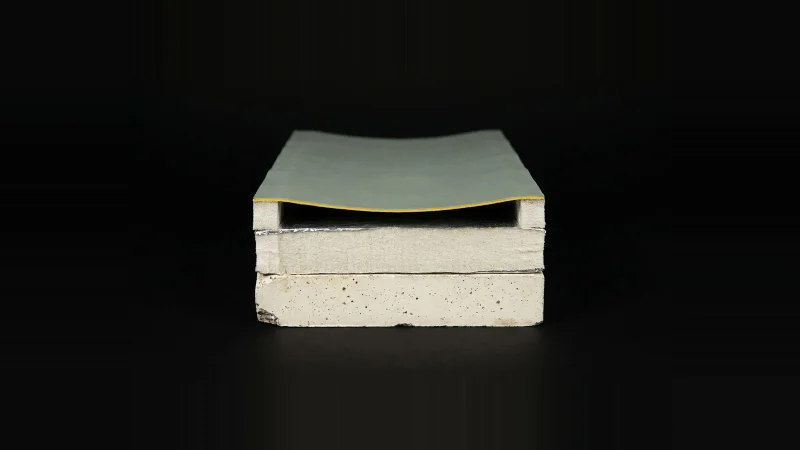
Cover board is a structural layer in most commercial roofing assemblies. It sits between the insulation and the membrane. On an ICI project, it's typically a high-density polyiso board, gypsum board, or a wood fiber product. It adds fire resistance, membrane protection, and wind-uplift performance.
It's also not cheap. On a mid-size commercial project, cover board can run $8–$14 per square foot installed, depending on the product spec. On a large project, that line item adds up fast.
The problem isn't that estimators don't know cover board exists. The problem is where it lives in the project documents.
A typical roofing assembly might reference cover board across three separate spec divisions: 07 22 00 (roof and deck insulation), 07 50 00 (membrane roofing), and 07 72 00 (roof accessories). Each section may reference the product differently. One might call it "cover board," another "protection board," another "high-density overlay."
If the roofing sub only pulls their number from Division 07 50 00 and the cover board spec is buried in 07 22 00, they may not price it. If your scope letter just says "complete roofing assembly per specifications," you've handed them the ambiguity and they'll use it.
Drawings show the membrane, the insulation layer, and the deck. Cover board, if it appears at all, shows up in a roof assembly detail — sometimes a small callout on one sheet. On large projects with 2,000-page document sets, that detail is easy to miss.
When drawings don't show it explicitly and the spec references are scattered, it becomes "readily inferable" scope. That language creates the problem. As one Senior PM at a Canadian ICI GC put it: "Our construction management clients expect us to find the scope gaps in the design too now. They expect us to be designers and engineers."
Readily inferable scope is not free scope. It becomes a dispute the moment the sub sends you a change order.
This example comes directly from the Scope Gap Playbook, built on 200+ interviews with GC estimators and pre-construction leaders across North America.
On a $50M commercial project, the roofing sub's lump-sum price did not include cover board. The sub's position was that the scope letter didn't explicitly call it out. The GC's position was that it was part of a "complete assembly per the drawings and specifications."
The gap was $400K. The GC recovered it — but only because of a longstanding relationship with the sub. The sub made a relational concession. There was no contractual basis to recover it.
That's the worst version of this story. No claims filed, no arbitration, just a relationship used up on a scope error that never should have existed.
According to the Arcadis 2025 Global Construction Disputes Report, the average U.S. construction dispute is now worth $60.1M. Errors and omissions in contract documents have been the leading cause of disputes for six of the last nine years. Cover board omissions are a textbook example of exactly that category.
This is the most-cited scope anti-pattern across the 200+ GC interviews that inform the Scope Gap Playbook. Estimators use it because it feels complete. It's not.
Here's what "as per plans and specs" does not do:
A Pre-Construction Lead at a Top-ENR Canadian GC described it this way: "It's descriptive — bread, put it on a plate, use the open jar… You have to get to that level of detail or else they'll just be like, 'you didn't tell us that.'"
That's the peanut-butter test. If your scope letter can't pass it on cover board, it won't hold up in a buyout conversation.
Before you write the scope letter, you need to know where cover board is called out in your documents. Here are the four places to check on any ICI roofing package:
Look for details labeled "Typical Roof Assembly" or "Insulation/Membrane Section." Cover board should appear as a distinct layer. If it's not labeled, check for a general note or specification cross-reference in the detail bubble.
This is where cover board is most often specified as an insulation accessory. It may be called "protection board," "high-density polyiso overlay," or "cover board." Read the full section, not just the product table at the front.
The membrane spec may require cover board as a substrate condition for warranty compliance. If the membrane manufacturer requires it and the spec section says the assembly must meet manufacturer requirements, cover board is implicitly required — even if it's not listed as a separate line item.
Cover board requirements are frequently added or clarified in addenda after the original issue. If you're relying on the base spec set and haven't checked every addendum, you may be missing the definitive callout.
This is exactly the kind of multi-document search that takes an experienced estimator hours to run manually. Chat Agent answers spec questions like "where is cover board specified in this project set?" in under 20 seconds, with cited references back to the source document and section.
A scope letter that closes the cover board gap doesn't rely on generic language. It calls out the specific product, the specific spec section, and confirms inclusion or exclusion in plain language.
Here's the difference:
The goal is to force an explicit confirmation or exclusion from the sub. If they exclude it, you know before bid day. If they include it, you have documentation.
This connects directly to Habit 2 from the Scope Gap Playbook: specific document references, not generic incorporation. The habit sounds simple. In practice, it requires knowing exactly where every scope element lives in the document set before you draft the scope letter.
Cover board is not the only recurring envelope gap. It's part of a pattern. In 2026, roofing envelope gaps remain among the top recurring ICI change-order categories, driven by:
FMI's Construction Disconnected report puts the annual U.S. rework cost from miscommunication and bad project data at $31 billion. Twenty-six percent of that rework traces back to communication breakdowns. Scope letters that rely on "as per plans and specs" are a direct contributor.
For a deeper look at how these gaps occur across all envelope and specialty trades, see the full trade-by-trade breakdown in the Scope Gap Playbook — Trade-Specific Scope Gaps chapter.
The $400K cover board gap took hours to discover — and it was discovered too late. The issue was that no one on the pre-construction team had time to cross-reference three spec sections against the roof assembly drawings and every addendum before sending the scope letter.
That's a document problem as much as a process problem.
Scope Agent reads the full project set — drawings, specifications, and addenda — and generates a complete scope-of-work package in under 60 minutes. It replaces 30–40 hours of manual review per bid. It catches the kind of scattered, multi-section callouts that cover board represents: items that are in the documents but not in one obvious place.
Risk Review layers on top of that with a 99.5%-accurate risk checklist. It flags the contract language and spec conditions — like "readily inferable" or manufacturer warranty requirements — that create exposure on envelope assemblies.
Provision has reviewed over $100 billion in project value and processed more than 66,000 documents. Across that volume, envelope scope gaps — cover board, flashing, fire-stopping — are among the most consistent findings. For general contractors doing multiple bids per month, finding one of these per project pays for the platform many times over.
As one Senior PM framed it in the Scope Gap Playbook research: "If we could catch three scope gaps or three missed items on every scope of work, then this thing pays for itself."
Three items. That's the threshold. Cover board alone can clear it.
If your team is still running scope reviews manually on large ICI document sets, see how Scope Agent works on a real project set before the next bid cycle.
A roofing cover board scope gap occurs when cover board — a layer between the roof insulation and membrane — is not explicitly confirmed in a roofing sub's lump-sum price. It typically happens because cover board is specified across multiple spec sections and not always shown clearly on drawings, so subs and GCs each assume the other has priced it.
On a documented $50M ICI project, a cover board omission cost the GC $400K. The sub had not included it in their lump-sum price, and the scope letter did not explicitly confirm it was included. The GC absorbed the cost through a relational concession — there was no contractual basis for recovery.
Cover board is specified across multiple spec sections — typically Divisions 07 22 00, 07 50 00, and sometimes 07 72 00. It may also appear in addenda. When a scope letter uses generic "as per plans and specs" language instead of specific section references, subs may price only the sections they focused on and exclude cover board entirely.
The scope letter should name cover board explicitly, reference the specific spec sections where it appears (e.g., "cover board per Spec Section 07 22 00, Table 2.3"), and reference the drawings detail (e.g., "roof assembly per detail A-801"). Subs should be required to confirm inclusion or list it as an explicit exclusion before bid day.
Potentially yes — but "readily inferable" is a legal position, not a recovery strategy. GCs often find it difficult to enforce without clear spec callouts and drawing references. Relying on this language puts you in a dispute situation. The better approach is to eliminate the ambiguity in the scope letter before award.
Scope Agent reads the full project set — drawings, specs, and addenda — and generates a complete scope-of-work package in under 60 minutes. It identifies multi-section references like cover board before you draft scope letters. Risk Review flags spec language that creates envelope exposure. Together, they replace 30–40 hours of manual review per bid.
The Provision Scope Gap Playbook covers roofing, masonry, curtainwall, and other envelope trades in detail, including documented dollar examples from real GC projects. The trade-specific chapter is at provision.com/ebooks/scope-gap-playbook/trade-specific-scope-gaps.
Scope Agent reads your full project set and surfaces multi-section gaps like this before bid day.
See Scope AgentMore Articles