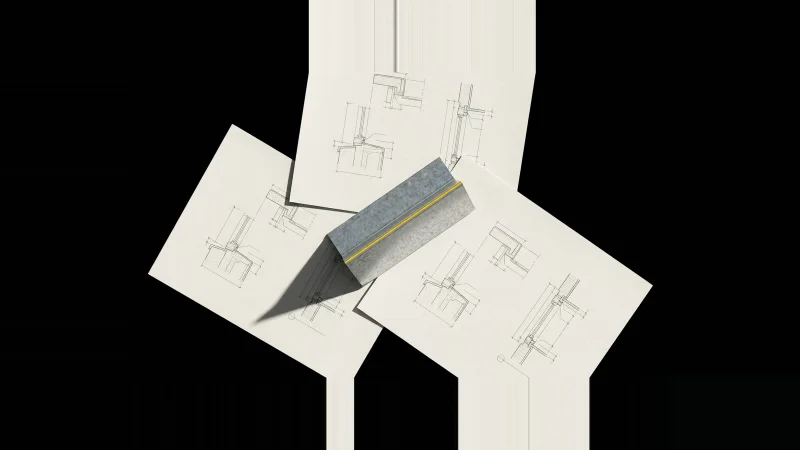
Glazing looks simple on paper. Glass, frames, seals. But in the field — especially on healthcare and institutional projects — the scope is anything but simple. Lead-lined glass, blast-rated systems, curtainwall mock-ups, and storefront-to-masonry flashings all live in different parts of the document set. Architects specify them separately. Engineers add requirements in structural and mechanical sections. And the glazing sub is often pricing only what they see in the curtainwall spec.
The gap between what the spec says and what the sub includes is where GCs absorb costs. Sometimes it's $20K. Sometimes it's $300K.
With healthcare and institutional construction growing in 2026, glazing spec complexity is increasing. More lead-lined assemblies. More mock-up requirements tied to owner QA programs. More interfaces between storefront and air/vapour barrier systems that nobody explicitly assigns. If you're a chief estimator or VP of Pre-Construction, glazing deserves the same scrutiny you give MEP.
This one is documented in The Scope Gap Playbook, sourced from 200+ GC interviews. A hospital imaging suite project. The architectural drawings showed glass partitions. The specs referenced radiation shielding requirements buried in a Division 13 or specialty section. The glazing sub priced standard glass. Nobody connected the two.
The GC absorbed $300K in lead-lined glass costs under "readily inferable" contract language — the argument being that a hospital imaging suite obviously requires radiation shielding, so the GC should have caught it.
This is the trap. "Readily inferable" is one of the most dangerous phrases in a construction contract. It shifts the burden of document coordination to the GC. If your scope package doesn't explicitly assign lead-lined glass — with a document reference to the spec section and the drawings — you're exposed.
As one Senior PM at a Canadian ICI GC put it: "Our construction management clients expect us to find the scope gaps in the design too now. They expect us to be designers and engineers."
Lead-lined glass doesn't appear in the curtainwall spec. It appears in radiation shielding sections, sometimes in Division 13, sometimes scattered across specialty specs. Glazing subs don't read those sections unless you tell them to.
The same problem applies to blast-rated glazing on federal or institutional projects. The structural engineer specifies the performance requirement. The glazing sub prices standard systems. The gap shows up at buyout.
What to do:
That last point matters. The pre-bid walk is a scoping tool, not a courtesy — one of the Eight Habits documented in the playbook. Use it to confirm what the sub has read.
Mock-up requirements are increasingly common on institutional and commercial projects. The problem is where they live. The owner's QA requirements are often in Division 1. The curtainwall performance spec is in Division 8. The mock-up location and size might only appear on a drawing note — or in an addendum issued two days before bid day.
A curtainwall mock-up can run $50K to $150K depending on size, transport, and the number of owner review cycles. That cost needs to be in someone's scope. It's almost never explicit.
Common anti-patterns here:
The fix: your scope package needs to explicitly assign mock-up supply, delivery, erection, owner review attendance, and removal. If those items aren't in the sub's price, they're in yours.
This is a coordination gap, not a missing item — and it's harder to catch. Storefront flashings at the sill, head, and jamb conditions often sit at the intersection of three trades: glazing, masonry, and the waterproofing/envelope contractor. Nobody owns it explicitly until water gets in.
The storefront sub installs the frame. The masonry sub builds the rough opening. The envelope contractor does the air barrier and waterproofing — but stops at the frame edge. Who installs the through-wall flashing at the sill? Who seals the frame-to-masonry joint?
In The Scope Gap Playbook, masonry-storefront flashings are called out specifically as a recurring unassigned scope item. The dollar amounts vary — but the claim pattern is consistent. Water intrusion, disputes over who was responsible for the flashing, and a GC absorbing the cost of remediation.
The problem usually traces back to one anti-pattern: scope packages that copy the previous similar job. The last project had a different storefront system. The interface condition was different. Nobody updated the scope language.
The most common anti-pattern across all trades — and glazing in particular — is the phrase "as per plans and specs." It sounds thorough. It isn't.
A pre-construction lead at a Top-ENR Canadian GC described what actually works: "It's descriptive — bread, put it on a plate, use the open jar… You have to get to that level of detail or else they'll just be like, 'you didn't tell us that.'"
That level of detail means:
The point is not to write a novel. The point is to remove ambiguity before bid day, not after. As one estimating manager at a Canadian ICI GC noted: "We have less subs who just kind of a gentleman's agreement… they've become more quick to clarify that we're not including that one piece of scope."
Subs are sharper than they were five years ago. Your scope packages need to be sharper too.
A large hospital or institutional project can have 2,000+ pages of specifications across 50+ divisions. Glazing-related requirements appear in at least five or six of them — sometimes more. On bid day, a chief estimator is coordinating 30 trades simultaneously. Nobody has time to cross-reference Division 1, Division 8, Division 13, and the structural drawings to build a complete glazing scope picture.
That's the document problem. It's not about effort or expertise. It's about volume.
According to FMI's Construction Disconnected report, $31 billion in annual U.S. rework costs trace back to miscommunication and bad project data — with 26% attributed to communication breakdowns and 22% to bad data. Glazing interface gaps are a direct contributor to both categories.
Provision's Chat Agent lets you query the full project document set — drawings, specs, addenda, contracts — and get cited answers in under 20 seconds. Ask "what are all the mock-up requirements on this project?" and get a response with spec section references. It's not a replacement for judgment. It's a way to stop gaps from hiding in a 2,000-page document set.
For teams running multiple pursuits at once, Scope Agent generates complete scope-of-work packages from the project document set in under 60 minutes — replacing 30 to 40 hours of manual work per bid. It reads drawings and specs together, which is the only way to catch items like lead-lined glass that appear in a different division from the glazing spec.
The Eight Habits in The Scope Gap Playbook give a framework for tighter scope packages across all trades. For glazing, the most relevant habits are:
Start with the actual drawings for this project. Don't open a previous glazing scope package and edit it. The storefront conditions on this building are not the same as the last one.
Name the spec section. Name the drawing sheet. Don't use generic incorporation language. If the lead-lined glass requirement is in Section 13 49 00, say so explicitly in the glazing scope.
Before the scope package goes to subs, have someone review it who didn't write it. For glazing, that means checking that Division 1 mock-up requirements, Division 8 curtainwall specs, and any specialty shielding sections are all addressed — and that interface items are assigned.
One of the most consistent findings from 200+ GC interviews in the playbook: the buyout conversation on glazing happens too late. The scope package goes out. Bids come in. Everyone is relieved the number landed where it needed to. Nobody goes line by line through what the sub actually included.
Then the shop drawings arrive. Or the mock-up schedule gets issued. Or the lead-lined glass gets flagged in the RFI log. And the question becomes: who's paying for it?
Front-loading the buyout conversation — Habit 3 in the playbook — means getting on a call with the curtainwall sub before bids close. Walk through the scope package. Confirm they've read the shielding spec. Confirm they've included the mock-up. Confirm who's doing the sill flashing.
That conversation costs 30 minutes. Not having it can cost $300K.
If you're managing 15 pursuits simultaneously, the Risk Review tool can help prioritize where those conversations need to happen — flagging contract and spec language that creates exposure before you sign anything. It has reviewed over $100 billion in project value and found more than 1,000,000 risks across real construction documents.
Healthcare construction in 2026 is accelerating. New hospital wings, imaging centers, cancer treatment facilities, and federal institutional projects are all driving glazing complexity upward. More radiation shielding requirements. More blast-rated assemblies on secure facilities. More owner-driven mock-up and QA programs tied to facility commissioning.
Every one of those requirements adds a layer to the glazing scope. And every layer is a potential gap between what the sub priced and what the contract requires.
The Arcadis 2025 Global Construction Disputes Report puts the average U.S. construction dispute value at $60.1M — and notes that "errors and omissions in contract documents" has been the number-one dispute cause for six of the last nine years. Glazing scope gaps are a textbook example of how that happens: requirements in one division, pricing from another, and no one connecting them before bid day.
The firms managing this well aren't doing anything heroic. They're reading the full document set — drawings and specs together — before scope packages go out. They're using specific document references instead of "as per plans and specs." And they're having the buyout conversation before, not after, bids close.
For more on how scope gaps form and how to close them across all trades, the Trade-Specific Scope Gaps chapter of The Scope Gap Playbook covers glazing, MEP, envelope, and specialty assemblies in depth — grounded in what GCs actually see on the job.
A glazing scope gap is an item of glazing work that is required by the contract documents but not included in any subcontractor's price. Common examples include lead-lined glass, curtainwall mock-ups, and storefront flashings at masonry interfaces. The GC typically absorbs these costs after buyout.
Lead-lined glass requirements appear in specialty shielding spec sections — often Division 13 — not in the curtainwall or glazing spec. Glazing subs typically price Division 8 only. If the scope package doesn't cross-reference the shielding spec and explicitly assign lead-lined assemblies, the item falls through the gap.
That depends entirely on how the scope packages are written. In most disputes, the storefront sub, masonry sub, and envelope contractor each exclude it. The GC ends up responsible. Assigning the interface explicitly — naming the trade and the specific condition — in the scope package before bid is the only reliable fix.
The scope package should explicitly assign mock-up supply, delivery to site, erection, owner review attendance, disassembly, and removal. Division 1 mock-up requirements need to be cross-referenced against the Division 8 curtainwall spec. Addenda updates to mock-up requirements should trigger a scope package review before bid day.
"Readily inferable" is the highest-risk phrase. It allows an owner or CM to argue that the GC should have understood a scope requirement even if it wasn't explicitly stated — as happened with the $300K lead-lined glass omission on a hospital imaging suite. Specific document references and explicit scope assignments are the defense.
Tools like Provision's Scope Agent read drawings and specs together — which is necessary to catch items like lead-lined glass that appear in a different division from the glazing spec. The Chat Agent lets estimators query the full project document set to find mock-up requirements, shielding specs, and interface conditions in seconds, not hours.
Yes. Healthcare projects combine radiation shielding requirements, owner QA programs with formal mock-ups, and complex envelope interfaces — all in a single project. Each element is specified across multiple divisions. Without deliberate cross-referencing before bid, glazing change orders are almost predictable. The $300K lead-lined glass example is not an outlier.
Scope Agent reads drawings and specs together to surface lead-lined glass, mock-up requirements, and interface items in under 60 minutes.
See Scope Agent workMore Articles