Drywall and framing is one of the highest-volume scopes a GC bids. It touches nearly every trade, affects fire-life-safety compliance, and generates more RFIs and change orders than almost any other interior trade when the scope package is thin.
Yet most scope packages for drywall and framing are still assembled manually — one estimator, one set of drawings, one massive spec book. On a mid-size commercial project, that process takes 30 to 40 hours before a single sub even gets the package.
This guide breaks down exactly what a complete drywall and framing scope of work covers, where the common gaps are, and how leading GC teams are compressing that assembly time without sacrificing accuracy.
A complete scope package for drywall and framing isn't just a list of what the sub installs. It defines the full extent of work, identifies material responsibilities, sets quality standards, and ties the sub's work back to the contract documents.
Here's what that looks like across the eight core scope categories:
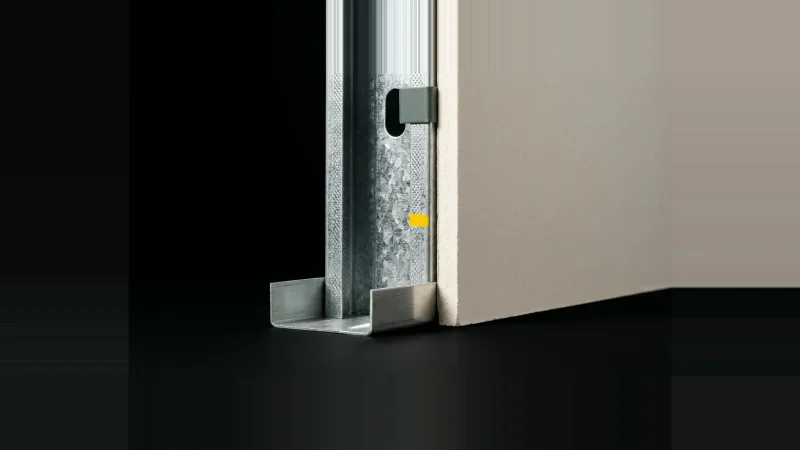
This is the backbone of the scope. It should specify:
Gauge and spacing requirements vary by wall height and lateral load. If the scope doesn't call these out explicitly, subs will default to minimum spec — and the GC absorbs the delta on bid day or through a change order.
This section covers board type, thickness, and application method. Key items:
Division 09 drywall requirements spell most of this out — but only if the estimator has read the full spec section, not just the summary.
This is where scope gaps are most expensive. Fire-rated assemblies are often buried across multiple sections: Division 09, the fire protection narrative, the life-safety plan notes, and the structural drawings.
A complete scope package captures:
Missing a 2-hour corridor assembly on a healthcare project isn't a pricing miss — it's a liability. This section of the scope package deserves more attention than it typically gets.
Shaft walls are a separate system — different framing, different board, different installation sequence. They need their own scope section. Include:
Shaft wall scope is routinely underpriced because it gets bundled into the general drywall line. When it's broken out, subs price it correctly — and so does the GC.
STC and IIC ratings are specified in the architectural drawings and Division 09 specs. They need to appear in the drywall and framing scope explicitly. Include:
On multifamily and hospitality projects, acoustic scope gaps become tenant complaints and legal exposure post-occupancy.
Finish level requirements (GA-214 Level 0 through Level 5) should be assigned by area and use. Don't leave this open to interpretation.
Finish scope disputes — "that's a paint prep issue, not my finish" — are almost always caused by a vague or missing scope section.
These items appear in the drawings and specs but frequently get dropped from scope packages:
Every one of these is a change order waiting to happen when left out of the original scope.
The scope package should also define what the sub is responsible for delivering, not just installing:
Most scope gaps aren't caused by careless estimators. They're caused by the way construction documents are structured.
A 400,000 SF office building might have 2,000+ pages of drawings and specs. The drywall and framing requirements are scattered across:
A manual scope extraction process — reading each section, cross-referencing drawings, reconciling conflicts — takes a skilled estimator 8 to 12 hours for this trade alone. That's before writing the scope document.
When teams are managing 10 to 15 active pursuits, something gets missed. It's not a capability problem. It's a volume problem.
A scope package isn't just a GC document. It's what your interior framing subcontractor uses to price the work accurately and build their buyout strategy. A thin scope invites qualifications, exclusions, and low bids that blow up in the field.
When subs receive a complete scope package, three things happen:
For an interior framing subcontractor, the scope document is as important as the drawings. Treat it that way.
For a complete drywall and framing bid package, these are the Division 09 spec sections that carry the most scope weight:
| Spec Section | Title | What It Governs |
|---|---|---|
| 09 21 16 | Gypsum Board Assemblies | Board type, thickness, rated assemblies, installation methods |
| 09 22 16 | Non-Structural Metal Framing | Stud gauge, spacing, height limits, deflection heads |
| 09 29 00 | Gypsum Board | Product requirements, performance criteria, submittals |
| 09 22 36 | Metal Support Assemblies | Suspension systems, furring, and ceiling support |
| 09 81 00 | Acoustic Insulation | Sound attenuation batts, STC performance |
| 01 33 00 | Submittal Procedures | Product data, shop drawings, mock-up requirements |
Each of these sections needs to be read in full — and cross-referenced against the drawings — before the scope document is final. On a complex project, that's hours of work per section.
According to ASPE, scope package assembly is the single most time-consuming pre-bid activity. For drywall and framing on a mid-size commercial project, most estimating teams report spending:
That's 16 to 26 hours for one trade package on one pursuit. Multiply that across 10 active bids and a team of three estimators, and the math stops working.
GC teams using Scope Agent are generating complete scope-of-work packages from construction documents in under 60 minutes. That's not a productivity tip — it's a structural change in how preconstruction capacity gets used.
Provision has processed over 66,000 construction documents and reviewed more than $100 billion in project value. The platform's accuracy on scope extraction is 95% verified across real project documents — not demo sets.
These are the scope errors that show up most often — and cost the most when they do:
Shaft wall is a separate system with different materials, sequencing, and labor rates. When it's bundled into the general drywall line, it's always underpriced. Break it out.
Writing "install per UL assemblies as shown" is not a scope. Name the specific assemblies. Confirm the hour ratings. Define who provides the firestopping at penetrations.
Wall type legends change. Rated assemblies get upgraded. Acoustic requirements shift. If the scope package was assembled before the final addendum, it may not reflect the actual bid documents. Chat Agent lets estimators query across all project documents — including addenda — in under 20 seconds, with cited answers that reference the actual spec section.
Who supplies access panels? Who supplies sound batt insulation? GC-furnished items need to be called out explicitly. Leaving it ambiguous means the sub excludes it and the GC absorbs it.
When the scope says "finish per architectural," every sub interprets that differently. Assign GA-214 finish levels by room type or zone. Remove the ambiguity before bid day.
Use this as a starting point for your internal scope review process. This list should be verified against the actual project documents — not used as a standalone checklist.
For a downloadable version, see Provision's scope of work template.
The manual process described above isn't going away because estimators are slow. It's going away because the document volume has outpaced the available hours.
Purpose-built construction AI tools — not general AI like ChatGPT — are now doing the heavy lifting on scope extraction. The difference matters. ChatGPT doesn't know what a deflection head is. It doesn't cross-reference Division 07 against Division 09. It can't cite the specific spec section where the 2-hour rated assembly requirement lives.
Scope Agent is built for this. It reads the full project document set — drawings, specs, addenda — and generates complete, trade-specific scope packages in under 60 minutes. GC teams using it are handling 2x more pursuits with the same headcount.
The Risk Review tool adds a second layer: a 99.5% accurate risk checklist that flags contractual and scope risks before the package goes out. It's 5x more accurate than ChatGPT on real construction specifications.
For GC teams that want to see how this works on a real drywall and framing project, the EllisDon case study is a good place to start. Their team used Provision to save $1.8M on a single project.
You can also request a demo to see it run against your own project documents.
A complete scope covers eight categories: interior metal framing, gypsum board systems, fire-rated assemblies, shaft wall systems, acoustical requirements, finish levels, miscellaneous items (access panels, furring, soffits), and submittal and close-out requirements. Each category should reference the specific spec section and drawing details that govern it.
The primary sections are 09 21 16 (Gypsum Board Assemblies), 09 22 16 (Non-Structural Metal Framing), 09 29 00 (Gypsum Board), and 09 22 36 (Metal Support Assemblies). Acoustic requirements are in 09 81 00. Submittal requirements typically live in Division 01, and firestopping is in Division 07.
For a mid-size commercial project, most GC estimating teams spend 16 to 26 hours on a single drywall and framing scope package — including extraction, writing, review, and sub coordination. GC teams using Scope Agent reduce this to under 60 minutes.
The most common gaps are: shaft wall systems priced as standard drywall, vague fire-rating language without UL assembly numbers, missing addenda revisions, no material responsibility matrix for GC-furnished items, and finish level assignments left undefined. Each one is a potential change order.
A fire barrier resists fire spread and requires a specific hourly rating — 1, 2, or 3 hours — backed by a tested UL assembly. A smoke barrier limits smoke movement and may not require the same hourly rating. Both appear in the life-safety plans and the Division 09 specs. Both need to be called out separately in the scope package.
List every GC-furnished item explicitly: access panels, specialty anchors, owner-supplied fixtures requiring backing, etc. Include who frames the opening, who coordinates delivery, and who is responsible for installation. Leaving material responsibility ambiguous guarantees a scope gap or a change order.
Purpose-built construction AI can — general AI tools like ChatGPT typically can't. Provision's Scope Agent achieves 95% verified accuracy across real project documents and has processed over 66,000 construction documents. It reads drawings, specs, and addenda together — not just spec text in isolation.
See Scope Agent surface missing trades, drawing conflicts, and spec gaps in under 60 minutes.
See Scope AgentMore Articles