Specs are rarely code-complete. Designers issue documents under time pressure. Code references get copied from past projects. AHJ interpretations differ by jurisdiction. And somewhere in the gap between what the documents say and what the code actually requires, estimators are the last line of defense before a project goes to bid.
If you're pricing institutional work — schools, hospitals, government facilities — the stakes are higher. Institutional construction is up 22% year-over-year in 2026. Those owners bring complex occupancy classifications, strict AHJ oversight, and specs that reference dozens of code sections. Miss one, and you own it.
This article lays out what GC estimators need to catch during building code compliance preconstruction review — before bid day turns a spec oversight into a six-figure change order.
For six of the last nine years, "errors and omissions in contract documents" has been the number one cause of construction disputes globally (Arcadis 2025 Global Construction Disputes Report). That statistic isn't about negligence. It's about volume. A commercial project spec book runs 1,500 to 2,500 pages. Designers reference IBC, NFPA, ASHRAE, local amendments, and AHJ rulings — often in different sections, sometimes inconsistently.
The result: code requirements get buried, referenced without detail, or assumed to be "the contractor's responsibility to verify." That phrase — "contractor to verify compliance with applicable codes" — shifts risk to the GC without spelling out what compliance actually requires.
Estimators who treat building code review as the engineer's problem will lose money on it. The ones who treat it as a scoping tool win.
IBC occupancy classification drives fire rating, egress, sprinkler, and accessibility requirements. On mixed-use or institutional projects, classification isn't always clear-cut. A community health clinic inside a K-12 school carries both I-2.1 and E occupancy triggers. If the spec assumes one and the AHJ reads another, you're looking at upgraded assemblies mid-construction.
During bid review, check that:
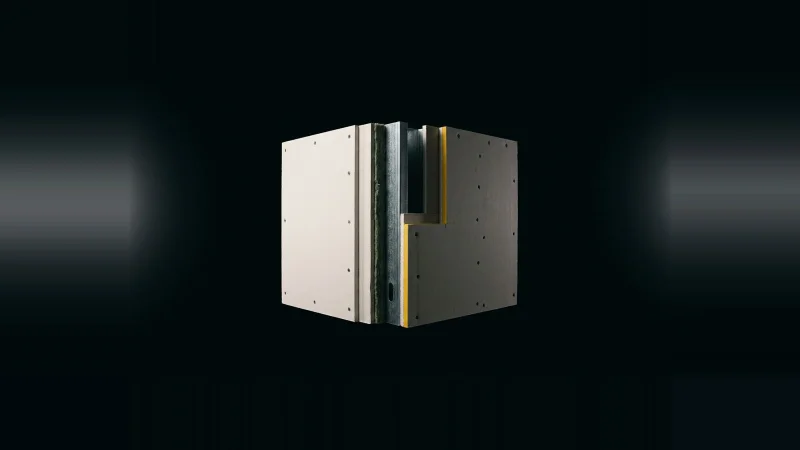
This is one of the most common code gaps in commercial work. The architectural drawings call for a 2-hour rated wall. The spec Section 09 21 16 references a UL assembly. The structural drawings show a detail that doesn't match that assembly. No one flagged it. You priced the drawings. The AHJ flags it during permitting.
The gap between what the drawings show and what the code-required UL assembly actually needs — extra layers, specific fastener patterns, firestopping — can run $30K to $80K on a single floor plate. Multiply that across a multi-story project and you have a material number.
On U.S. federal and state-funded projects, ADA compliance is non-negotiable. On Canadian institutional work, AODA and provincial building code overlap creates its own version of the same problem. Specs often reference compliance without specifying which edition of ANSI A117.1 applies, or whether the local code amendment supersedes the base standard.
Common gaps estimators miss:
ASHRAE 90.1 and local energy codes touch mechanical, electrical, envelope, and lighting. They are rarely coordinated across those divisions in the spec. Division 23 references one ASHRAE edition. Division 26 references another. The envelope spec doesn't mention continuous insulation requirements that ASHRAE 90.1-2022 mandates for the climate zone.
On institutional projects where the owner is chasing LEED or pursuing a green building standard, energy compliance gaps discovered late can require redesign — not just upgraded materials. That's not a change order. That's a schedule event.
NFPA 101 — the Life Safety Code — governs egress in most jurisdictions. On renovations or additions, the complexity compounds. The new work has to meet current code. The existing building gets grandfathered on some items. The junction between new and existing becomes a gray zone.
Estimators working renovation or addition projects need to flag:
Code compliance isn't just a Division 01 issue. It runs through the trades. Here's where estimators most often find code-related gaps during a building code review in estimating.
For a deeper look at trade-specific scope gaps beyond code, see the trade-specific gaps chapter of the Scope Gap Playbook, which covers how MEP, drywall, envelope, and specialty trades produce recurring scope misses on commercial projects.
Most code compliance misses during pre-construction aren't random. They follow patterns. Recognizing them is the first step to stopping them.
This is the single most-cited anti-pattern in our research with 200+ GC interviews for the Scope Gap Playbook. A scope sheet that says "as per plans and specs" for fire-rated assemblies, accessibility, or energy compliance tells the sub nothing — and protects the GC nothing. When the AHJ requires something not shown on the drawings, that language becomes a liability, not a shield.
Code editions change. ASHRAE 90.1-2022 is more aggressive on envelope than the 2019 edition. NFPA 72-2022 added mass notification requirements. If your checklist is built from a project that ran under the 2019 IBC and you're pricing under a jurisdiction that adopted the 2021 IBC, your review is already behind.
Code compliance review done under bid-day time pressure is risk review in name only. As a Pre-Construction Lead at a Top-ENR Canadian GC put it: "If you miss anything, they'll bill it." Subs have gotten more precise about what they're including and excluding. A sub who prices a fire alarm system under NFPA 72-2019 when the AHJ requires 2022 compliance will hand you the delta as a change order.
Designers are not code compliance guarantors on GC-risk delivery methods. On design-bid-build, the specs are issued as-is. On design-build or CM-at-risk, the GC often carries compliance risk explicitly. Either way, the estimator who assumes the engineer caught every code reference is the estimator who writes the change order.
This isn't exhaustive — every project and jurisdiction adds layers. But these are the items that most often produce cost surprises in institutional and commercial work.
For more on writing sub scope sheets that hold at buyout, the subcontract language chapter of the Scope Gap Playbook covers how to structure scope inclusions and clarifications so code compliance obligations don't float between parties.
Most GC subcontracts include language requiring subs to perform work that is "reasonably inferable" from the contract documents. Courts and arbitrators have used this standard to hold subs — and GCs — to requirements not explicitly stated in the specs.
For code compliance, this creates a specific problem. If the code requires fire-rated backing at a specific location and the drawings don't show it, is it "readily inferable"? Depending on the jurisdiction and the contract language, the answer may be yes — and the cost lands on whoever didn't price it.
A Senior PM at a Canadian ICI GC described the pressure this creates: "Our construction management clients expect us to find the scope gaps in the design too now. They expect us to be designers and engineers."
The practical answer isn't to accept that burden passively. It's to build a review process that catches what the documents don't say as reliably as what they do.
A 2,000-page spec book reviewed manually under bid-day time pressure produces gaps. That's not a team failure — it's a volume problem. The $31 billion in annual U.S. rework costs from miscommunication and bad project data (FMI Construction Disconnected) doesn't come from estimators not caring. It comes from the document volume outpacing the review capacity.
Provision's Risk Review runs a structured risk checklist across your project documents — specs, drawings, contracts, addenda — and flags code-related gaps, missing references, and conflicting requirements. It has a 99.5% accuracy rate on pre-built risk checklists. Across more than $100 billion in project value reviewed and 66,000 documents processed, it has surfaced over 1,000,000 risks that manual review missed or would have taken hours to find.
For general document queries — "What does Division 28 say about the NFPA 72 edition?" or "Does the spec address smoke control system responsibility?" — Chat Agent returns cited answers from your actual project documents in under 20 seconds.
These tools don't replace the estimator's judgment. They handle the document volume so estimators can focus on the decisions that require experience — not on searching a 2,000-page spec for a code reference that may or may not be there.
If you work at a GC firm doing institutional or commercial work and want to see how this plays out on a live project set, request a demo and we'll run it against your documents.
Building code compliance in pre-construction is the process of reviewing project documents — specs, drawings, and contracts — to verify that design requirements match applicable building codes before bid day. It includes checking IBC occupancy classifications, fire-resistance assemblies, ASHRAE energy standards, NFPA life safety references, and ADA/accessibility requirements. Gaps found in pre-construction are resolved as RFIs or qualifiers. Gaps found after award become change orders.
Specs are often assembled under tight design schedules using templates from past projects. Code editions change — IBC, NFPA, and ASHRAE all update on 3-year cycles, and local adoption lags vary by jurisdiction. When a designer copies a spec section from a prior project without updating the referenced code edition, compliance gaps enter the documents and get passed to the GC and subs to resolve.
MEP trades — mechanical, electrical, and plumbing — carry the highest code compliance risk because they reference multiple code bodies (ASHRAE, NFPA 13, NFPA 72, NFPA 101, NFPA 110) that must be coordinated across divisions. Envelope (Division 07) carries energy code risk. Fire-rated assemblies in Division 09 carry IBC fire-resistance risk. On institutional projects, all of these apply simultaneously.
If time allows, issue an RFI and request clarification before bid. If the schedule doesn't allow it, include a written cost qualifier in your bid that states your price is based on the code edition referenced in the spec, and that compliance with a different edition or AHJ interpretation will be treated as a change. Never price an unresolved code reference without noting it — silence is acceptance.
"Readily inferable" is contract language that requires contractors to perform work that a competent professional would recognize as necessary, even if the documents don't explicitly show it. For code compliance, this means requirements mandated by the applicable building code can be held against the GC or sub — even if the spec omits them. The defense is a documented review process that flags the gap before bid, not after award.
Provision's Risk Review runs structured checklists across project documents — including specs, drawings, and addenda — and flags missing code references, conflicting requirements, and unresolved compliance obligations. It achieves 99.5% accuracy on pre-built checklists. For GC teams doing institutional work with dense spec books, it reduces the time spent on document review by up to 80% while improving the completeness of what gets caught.
Yes. Institutional projects — healthcare, education, government — layer occupancy-specific code requirements on top of base IBC. Hospitals trigger NFPA 99 and FGI Guidelines. Schools trigger state education department requirements on top of IBC Chapter 4. Government work often requires specific editions of code adopted by the federal or state authority. Estimators working institutional sectors need a trade-specific checklist, not a generic code review.
Risk Review flags missing code references and spec conflicts across your full project set before bid day.
See Risk ReviewMore Articles